 Chaitanya ArekarIoPP
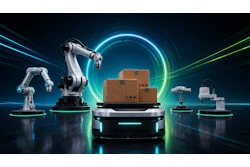
1. Packaging for automation: To keep the pace of AI deployment, packaging must be engineered for machine interfaces as primary users. This new focus unlocks a range of possibilities. For instance, packaging can incorporate latching surfaces, allowing Automated Guided Vehicles (AGVs) to register or attach to packaging for repeatable, precise handling. Additionally, packaging can be designed for robotic gripper access with features that minimize slippage and ensure secure manipulation. These enhancements help robots handle products reliably so packaging can be manipulated reliably, thereby reducing the risk of dropped or damaged goods. Furthermore, smoothing and structurally reinforcing package surfaces ensures that both the product and the robotic equipment remain protected during automated handling.
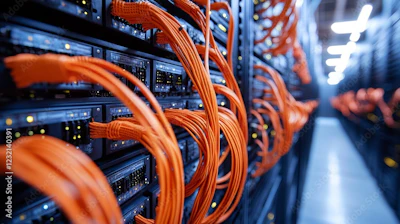
2. Packaging as a fixture: Building on the need for automation, another major challenge in large-scale AI clusters is cable management. Dense interconnecting cables often lead to tangled wires and disorganization, commonly referred to as the “spaghetti” problem. Here, packaging can serve as a fixture, offering solutions by pre-organizing cables before installation. For example, comb-like structures integrated into the packaging insert can hold cables in their final, indexed position. Further, instead of packaging each cable individually, which consumes unpacking time, packaging can be designed to act as a spool, allowing technicians to pull cables at scale and reduce set-up times.
Packaging as AI accelerator
Transitioning from cable management, packaging can also accelerate other aspects of AI hardware deployment such as stacking, hardware verification, and unpacking. By incorporating alignment rails and materials and surfaces with reduced friction, hardware can be positioned more easily and accurately. This simplifies handling for technicians and automated systems while allowing for initial testing and verification while the hardware remains secure in the packaging. These capabilities further reduce unpacking time and non-value-added work.
Moreover, excessive unpacking time can become a bottleneck, limiting the volume of hardware that can be processed. To address this challenge, fixture-based packaging should be designed for easy recovery and quick removal, ensuring that deployment remains efficient and scalable.
3. Single-stream material packaging: As we consider efficiency in assembly and logistics, the adoption of single-stream material packaging emerges as a key innovation. This approach eliminates the need to separate secondary or tertiary layers of packaging from the primary layer during assembly. For example, certain AI hardware parts need to be assembled in secure places where traditional packaging materials are not permitted. In such cases, products qualified with single-material packaging can be taken directly to the AI assembly spaces, reducing transfer times and simplifying reverse logistics.
4. Digitally compatible packaging: Finally, the integration of digital technologies into packaging can further streamline deployment. By equipping packaging RFID tags, 2D barcodes, and sensors (such as GPS, shock, and temperature monitors), organizations can enable faster deployment and receive proactive alerts. For example, tags can notify teams of system arrivals and facilitate automatic deployment by identifying destinations through building management systems. Sensors can log unusual shocks or temperature fluctuations, altering receiving teams and preventing “dead on arrival” units from entering the system. Moreover, hardware that experiences minimal shocks or temperature changes can bypass secondary inspections and be immediately deployed for AI workloads. Most importantly, time-stamped data empowers teams to make quick decisions—whether to continue deployment, order a replacement, or halt a shipment—thereby minimizing downtime.
Moving beyond product-focused solutions, QR codes on packaging can also empower people. By providing instant access to training materials, these codes enable new staff to quickly become autonomous and effective in their roles. This approach fosters greater independence and efficiency among team members.
By reimagining packaging as an active enabler to AI deployment, organizations can overcome traditional bottlenecks and unlock new levels of efficiency, reliability, and scalability in the age of intelligent automation.
The author, Chaitanya Arekar, is Lead Component Quality Engineer
at Meta Platforms and an IoPP Certified Packaging Professional.
With more than 20 years of experience, Chaitanya is at the forefront of packaging innovation for AI. He shapes strategy, drives deployment, and upholds quality standards for hardware.