After four days and roughly a marathon’s worth of walking through Düsseldorf’s expansive Messe grounds during interpack last month, the individual product launches and booth demos started to blur together while the larger industry patterns became much clearer. This year, it was the growing realization that packaging is being asked to do almost everything, all at once.
That tension surfaced repeatedly across the show floor, whether the conversation involved recyclable mono-material films, active packaging, barrier paper, compact automation cells, AI-enabled inspection systems, or 2D barcodes carrying unprecedented amounts of data. Suppliers across very different corners of the industry appeared to be converging on the same challenge: how to add functionality, intelligence, sustainability, and flexibility without adding complexity, labor burden, energy consumption, or material weight. In other words, packaging’s central challenge in 2026 may be optimization itself.
That balancing act appeared immediately in the industry’s accelerating move toward 2D barcodes and Sunrise 2027 initiatives. What once sounded like a straightforward upgrade from one-dimensional UPCs increasingly looks like a foundational infrastructure shift for packaging and supply chains. The challenge isn’t simply printing a QR code. It’s printing high-resolution, variable data reliably on fast-moving packaging lines while simultaneously supporting traceability, anti-counterfeiting, retailer requirements, consumer engagement, and downstream recycling or EPR reporting systems. The package increasingly functions not only as a container, but as a data carrier.
At the same time, packaging materials are being pushed toward lighter weight, higher recyclability, lower carbon impact, and improved barrier performance—often simultaneously.
Three years ago at interpack, recyclable barrier paper still felt experimental. This year, it felt commercial. Fiber-based flexible packaging structures appeared across applications ranging from confectionery to powdered goods, often using thin barrier layers designed to preserve repulpability while still delivering meaningful oxygen and moisture protection.
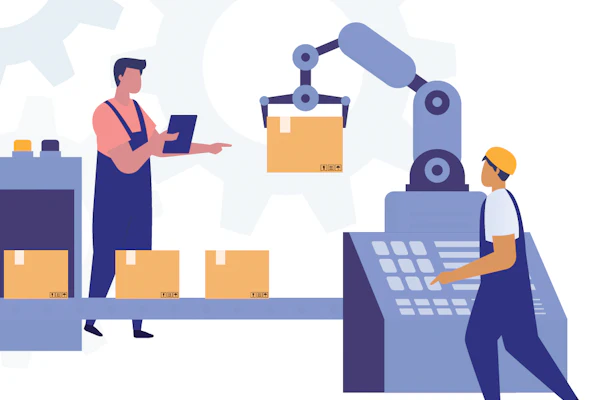
That same “do more with less” mindset extended into machinery design. Across the show floor, suppliers repeatedly emphasized reduced footprints, simplified changeovers, integrated functionality, and easier operation. At a time when manufacturers continue struggling with labor shortages, experience gaps, and brownfield space constraints, complexity itself has become a liability. Equipment suppliers are increasingly designing around labor realities as much as production requirements.
Artificial intelligence followed a similar pattern. Contrary to my expectations, interpack didn’t feel overwhelmed by flashy AI branding. Instead, AI increasingly appeared quietly embedded inside practical workflows. Inspection systems used machine learning to identify anomalies beyond traditional contaminant detection. Voice-enabled HMIs and OEE monitoring systems demonstrated how AI is beginning to simplify machine interaction itself.
Perhaps most notably, AI often appeared less as futuristic automation and more as infrastructure. It’s just another invisible layer helping operators manage rising complexity.
That shift extended well beyond machinery. Discussions around packaging artwork and asset management, along with compliance verification, revealed how quickly packaging itself is becoming a regulatory and data-management challenge. As brands navigate growing layers of EPR, PPWR, recycled-content mandates, allergen disclosures, and region-specific labeling rules, packaging artwork increasingly functions as a compliance system as much as a branding tool.
The same was true for broader conversations around EPR reporting, chemical disclosure requirements, and material traceability. Increasingly, packaging developers are being asked not only to design packages, but also to manage sprawling ecosystems of regulatory, environmental, and supply-chain data tied to those packages.
Sustainability remained omnipresent, though often in more operationally grounded forms than in previous years. European Packaging and Packaging Waste Regulation (PPWR) discussions loomed heavily over the show, but many conversations sounded familiar to U.S. audiences already navigating extended producer responsibility (EPR) laws state by state. Sustainability discussions also seemed to mature beyond single-solution thinking. Even compostability conversations emphasized that compostables are not universal replacements for conventional packaging, but targeted tools for specific applications such as food-soiled or difficult-to-recover formats.
That nuance may have been one of the most important themes of the week. Packaging is no longer being optimized for one variable at a time. It must be recyclable, lightweight, traceable, automation-friendly, durable, regulation-compliant, visually appealing, and increasingly intelligent—all while remaining economically viable.
Interpack 2026 suggested that the industry clearly understands that challenge. The harder question now is how successfully it can continue balancing all those competing, even mutually exclusive demands.
After four days and roughly a marathon’s worth of walking through Düsseldorf’s expansive Messe grounds during interpack last month, the individual product launches and booth demos started to blur together while the larger industry patterns became much clearer. This year, it was the growing realization that packaging is being asked to do almost everything, all at once.
That tension surfaced repeatedly across the show floor, whether the conversation involved recyclable mono-material films, active packaging, barrier paper, compact automation cells, AI-enabled inspection systems, or 2D barcodes carrying unprecedented amounts of data. Suppliers across very different corners of the industry appeared to be converging on the same challenge: how to add functionality, intelligence, sustainability, and flexibility without adding complexity, labor burden, energy consumption, or material weight. In other words, packaging’s central challenge in 2026 may be optimization itself.
That balancing act appeared immediately in the industry’s accelerating move toward 2D barcodes and Sunrise 2027 initiatives. What once sounded like a straightforward upgrade from one-dimensional UPCs increasingly looks like a foundational infrastructure shift for packaging and supply chains. The challenge isn’t simply printing a QR code. It’s printing high-resolution, variable data reliably on fast-moving packaging lines while simultaneously supporting traceability, anti-counterfeiting, retailer requirements, consumer engagement, and downstream recycling or EPR reporting systems. The package increasingly functions not only as a container, but as a data carrier.
At the same time, packaging materials are being pushed toward lighter weight, higher recyclability, lower carbon impact, and improved barrier performance—often simultaneously.
Three years ago at interpack, recyclable barrier paper still felt experimental. This year, it felt commercial. Fiber-based flexible packaging structures appeared across applications ranging from confectionery to powdered goods, often using thin barrier layers designed to preserve repulpability while still delivering meaningful oxygen and moisture protection.
That same “do more with less” mindset extended into machinery design. Across the show floor, suppliers repeatedly emphasized reduced footprints, simplified changeovers, integrated functionality, and easier operation. At a time when manufacturers continue struggling with labor shortages, experience gaps, and brownfield space constraints, complexity itself has become a liability. Equipment suppliers are increasingly designing around labor realities as much as production requirements.
Artificial intelligence followed a similar pattern. Contrary to my expectations, interpack didn’t feel overwhelmed by flashy AI branding. Instead, AI increasingly appeared quietly embedded inside practical workflows. Inspection systems used machine learning to identify anomalies beyond traditional contaminant detection. Voice-enabled HMIs and OEE monitoring systems demonstrated how AI is beginning to simplify machine interaction itself.
Perhaps most notably, AI often appeared less as futuristic automation and more as infrastructure. It’s just another invisible layer helping operators manage rising complexity.
That shift extended well beyond machinery. Discussions around packaging artwork and asset management, along with compliance verification, revealed how quickly packaging itself is becoming a regulatory and data-management challenge. As brands navigate growing layers of EPR, PPWR, recycled-content mandates, allergen disclosures, and region-specific labeling rules, packaging artwork increasingly functions as a compliance system as much as a branding tool.
The same was true for broader conversations around EPR reporting, chemical disclosure requirements, and material traceability. Increasingly, packaging developers are being asked not only to design packages, but also to manage sprawling ecosystems of regulatory, environmental, and supply-chain data tied to those packages.
Sustainability remained omnipresent, though often in more operationally grounded forms than in previous years. European Packaging and Packaging Waste Regulation (PPWR) discussions loomed heavily over the show, but many conversations sounded familiar to U.S. audiences already navigating extended producer responsibility (EPR) laws state by state. Sustainability discussions also seemed to mature beyond single-solution thinking. Even compostability conversations emphasized that compostables are not universal replacements for conventional packaging, but targeted tools for specific applications such as food-soiled or difficult-to-recover formats.
That nuance may have been one of the most important themes of the week. Packaging is no longer being optimized for one variable at a time. It must be recyclable, lightweight, traceable, automation-friendly, durable, regulation-compliant, visually appealing, and increasingly intelligent—all while remaining economically viable.
Interpack 2026 suggested that the industry clearly understands that challenge. The harder question now is how successfully it can continue balancing all those competing, even mutually exclusive demands.