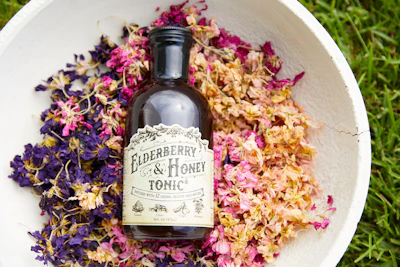
What began in Haley Maness’s kitchen as a personal response to chronic illness and early motherhood has grown into Roots and Leaves, a 60-SKU herbal wellness brand carried by roughly 3,500 independent retailers nationwide. Yet despite its rapid expansion, the company’s packaging remains closely tied to the same principles that shaped its first product, Elderberry & Honey Tonic. For Maness, packaging was never a secondary business decision. It was part of the product’s integrity from the beginning.
Maness, an herbalist and founder of Roots and Leaves, launched the company after her own struggle with Lyme disease and mold exposure led her to herbal medicine when conventional treatments failed. At the same time, she was creating remedies for her infant daughter’s colic, diaper rash, and sleep issues. Many of those homemade formulations became the backbone of the business.
“What really differentiates Roots and Leaves is that the products weren’t created to start a business, they were created out of necessity during my personal healing journey,” Maness says. “Every product comes from a place of real-life use and real-life need, not from chasing trends in the wellness industry.”
That deeply personal origin story shaped not only her formulations, but also her packaging philosophy. From the outset, Maness prioritized glass packaging whenever practical. In the company’s earliest days, that meant filling tonic in Ball mason jars purchased from Walmart. As Roots and Leaves scaled, those jars gave way to glass stout bottles that offered improved retail presence while maintaining the material benefits Maness valued.
“Many of our products are herbal extracts, vinegars, and nutrient-dense liquids, and glass protects the integrity of those ingredients without the potential chemical interactions you can see with certain plastics,” she explains. “I was very intentional about minimizing unnecessary toxins in every part of the process, including packaging.”
Today, 32 of Roots and Leaves’ products are packaged in glass, including tonics, tinctures, dropper bottles, and skincare jars. Glass remains the preferred choice because it aligns with both ingredient protection and sustainability goals through recyclability and durability.
 Roots & Leaves’ herbal tea line uses compostable, plant-based pouches with botanical graphics and color coding to communicate product function while reducing reliance on petroleum-based plastics.Roots and Leaves
Still, Maness’s approach is pragmatic. Product safety and functionality often require compromise, and her packaging decisions reflect a practical understanding of real-world use. Shampoo and conditioner, for example, are sold in recyclable high-density bottles because glass is unsafe for wet shower environments. Sunscreen is packaged in tubes made from sugarcane-derived resin, while loose-leaf teas use compostable, plant-based bags derived from fermented starches such as cornstarch or sugarcane. Soap bars are contained in recyclable paperboard cartons.
“So, while glass is always our first choice, our broader approach is to balance product safety, functionality, and sustainability, choosing the best available packaging material for each product type,” Maness says.
This material flexibility is central to Roots and Leaves’ sustainability ethos. Rather than relying on broad environmental claims, the company continuously evaluates emerging packaging technologies to reduce petroleum-based plastics while preserving shelf stability and customer safety.
 Roots & Leaves packages its bar soaps in recyclable paperboard cartons, using color variations and botanical graphics to differentiate scents.Roots and Leaves
Packaging design has followed a similarly personal path. Without outside agencies or consultants, Maness developed the brand’s visual identity herself while still working in corporate HR. Her lifelong interest in graphic design, paired with a deep appreciation for herbal traditions, became the basis for Roots and Leaves’ distinctive aesthetic.
“I’ve always loved the old-school apothecary aesthetic, that timeless, herbalist feel of traditional remedy shops,” Maness says. “I wanted the packaging to feel like something you might have found in a traditional herbal apothecary but updated in a way that still feels clean and modern on a retail shelf.”
The resulting design architecture blends heritage and modernity. Earthy botanical hues such as greens, creams, browns, and muted purples dominate the brand’s color palette. Typography evokes traditional remedy labels, with classic fonts chosen for readability and permanence rather than trend appeal. Product-specific illustrations often depict key botanical ingredients, such as elderberries or apples, helping consumers visually connect the product to its plant origins.
 Across formats, from glass bottles and dropper vials to paper-based kits and jars, Roots & Leaves maintains a consistent apothecary-inspired design that reinforces its focus on traditional herbal remedies and clean ingredients.Roots and Leaves
For Maness, these graphics are more than shelf decoration. They communicate trust, tradition, and transparency. “My goal with the packaging was to evoke a feeling of slower days and traditional remedies, the kind of wisdom that was passed down from our grandmothers and great-grandmothers,” she says. “Ultimately, the goal was for someone to pick up a Roots and Leaves product and immediately feel that sense of authenticity and care.”
The modular label system she created also supports efficient line expansion. Consistent logo placement, typography, and layout establish strong shelf recognition, while color shifts and product naming allow for category differentiation across wellness products, teas, skincare, and personal care.
Retailers have responded positively. According to Maness, independent store owners frequently cite the packaging itself as a major driver of sales. “One of the most common things I hear from retailers is that the products look like artwork on their shelves,” she says. “Retailers often tell me that customers will pick up the product simply because it catches their eye.”
That success underscores how closely Roots and Leaves’ packaging reflects its broader company ethos. Built around small-batch manufacturing, family wellness, community employment, and partnerships with independent retailers rather than mass marketplaces like Amazon, the brand’s packaging choices consistently reinforce its values.
As Roots and Leaves continues to grow, Maness remains focused on maintaining that alignment: “At the end of the day, Roots and Leaves is really about creating the kinds of products I wished existed when my family needed them most, clean, effective herbal products made with integrity and no greenwashing.” PW