Create a free OEM Magazine account to continue reading
What Tariff Turbulence Means Heading Into 2026
At PMMI’s Annual Meeting, trade expert Leonardo Boccalon of TradeMoves LLC outlined the realities of the evolving tariff environment—and the strategies OEMs need to stay resilient heading into 2026.
These are modest wins, but they show that global partners still value open access to U.S. machinery and automation technologies — Boccalon
Sean Riley
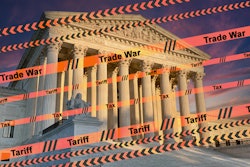
Even as the U.S. Supreme Court weighs the legality of current tariff policies, one takeaway is clear: tariffs aren’t going anywhere soon. Speaking at PMMI’s 2025 Annual Meeting, Leonardo Boccalon, Senior International Trade Analyst at TradeMoves LLC, urged manufacturers to prepare for an extended period of volatility in global trade and rising cost pressures.
“Tariffs have become not just an economic lever, but a foreign policy tool,” Boccalon said. “That means unpredictability is the new normal for manufacturers.”
Imports, exports, and exposure
According to Boccalon, U.S. machinery imports totaled nearly $7 billion in 2024, with top sources including the European Union, Switzerland, the United Kingdom, and Canada. Tariff exposure varies widely, ranging from approximately 13% to 50%, depending on the product's origin and material content, particularly for machinery that contains steel or aluminum.
At the same time, U.S. machinery exports reached roughly $2 billion, led by Canada, Mexico, and the EU. While retaliatory tariffs haven’t materialized to the extent expected earlier in the year, Boccalon noted that “tensions remain high, and that could change quickly as new trade disputes emerge.”
Steel and aluminum in focus
Boccalon highlighted recent expansions under Section 232, which governs steel and aluminum tariffs. The Trump administration’s second term has seen rates double from 25% to 50% on certain non-U.S. origin steel and aluminum content, with new coverage now extending to components and subassemblies.
“Machinery isn’t yet directly subject to Section 232 duties, but the rulemaking process requires annual review,” Boccalon warned. “That opens the door for machinery components to be pulled into scope—something the industry must monitor closely.”
Supreme Court review increases uncertainty
While a Supreme Court decision on the legality of certain tariffs could arrive before early 2026, Boccalon cautioned that even a ruling against the administration might not end the use of trade duties.
“Even if these tariffs are ruled illegal, there are alternative authorities available to reimpose them,” he said. “So the uncertainty doesn’t vanish—it just shifts.”
Refund processes could follow depending on the decision, but Boccalon emphasized that any potential reimbursement would require careful documentation and quick action. “Work with your customs broker,” he advised, “and ensure import records, product classifications, and country-of-origin data are current.”
Profit pressures and delayed investment
Citing PMMI’s own member survey data, Boccalon noted that 87% of manufacturers report being impacted by tariffs—up from earlier in the year. Many producers are absorbing the costs rather than passing them to customers, leading to eroded margins and delayed capital spending.
“The producer price index has consistently risen faster than the consumer price index,” Boccalon said. “That means manufacturers are holding the line—but at the cost of profitability and growth.”
What's next: USMCA review
Despite all the shifting tides, there remains limited exposure for North American supply chains.Sean RileyThe upcoming six-year review of the USMCA (United States-Mexico-Canada Agreement) adds another layer of uncertainty. While the agreement currently provides critical tariff-free access for most machinery trade, potential renegotiations could shift the landscape.
“The business community’s position is simple: if it’s not broken, don’t fix it,” Boccalon explained. “Maintaining duty-free access across North America is vital to our industry’s competitiveness.”
Pockets of progress These are modest wins, but they show that global partners still value open access to U.S. machinery and automation technologies — BoccalonSean Riley
Despite the turbulence, Boccalon highlighted several positive developments. New trade agreements with the European Union and Vietnam are gradually reducing tariffs on U.S. industrial goods by as much as five percentage points in some cases. Additionally, limited retaliatory action from trading partners like Mexico and Brazil has kept U.S. exporters relatively insulated compared to earlier fears.
“These are modest wins,” he said, “but they show that global partners still value open access to U.S. machinery and automation technologies.”
Navigating what’s next
Boccalon urged OEMs to take a proactive approach to tariff management rather than a reactive one. His recommendations included:
Audit your supply chain visibility: Know the origin of every component and subassembly.
Maintain accurate customs data: Ensure HS codes, values, and sourcing are verified for potential refund claims.
Engage with policymakers: Submit comments during public review periods to help shape the outcomes of trade policy.
Stay informed: Monitor PMMI and TradeMoves resources for weekly updates on tariff actions and regulatory changes.
“Visibility is your best defense,” Boccalon said. “If you can map your exposure, you can manage it.”
The trade landscape for OEMs remains in flux, driven by policy shifts, geopolitical pressures, and market adaptation. As Boccalon summarized, “Tariffs are here to stay—but so is American manufacturing. The challenge is learning to operate strategically within this environment rather than waiting for it to stabilize.”
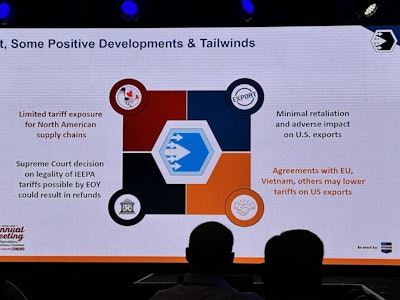
 Despite all the shifting tides, there remains limited exposure for North American supply chains.Sean Riley
 These are modest wins, but they show that global partners still value open access to U.S. machinery and automation technologies — BoccalonSean Riley
 These are modest wins, but they show that global partners still value open access to U.S. machinery and automation technologies — BoccalonSean Riley