OEMs should adopt pragmatic, incremental approaches to AI predictive maintenance by starting with narrow use cases, building operator trust, and leveraging existing data rather than pursuing overly ambitious deployments.
- No universal success metric: Predictive maintenance outcomes vary by manufacturer, from advance failure warnings to product quality preservation.
- Trust is foundational: Systems must integrate naturally into existing workflows and avoid overwhelming teams with false positives or noise.
- Start with non-intrusive data collection: Use existing protocols and systems in brownfield environments rather than rip-and-replace approaches.
- Quality over quantity: Dense, contextual data from machine signals, maintenance logs, and technician expertise matters more than raw data volume.
- Follow a maturity curve: Progress from condition-based monitoring to predictive maintenance to prescriptive capabilities, proving ROI at each stage before scaling.
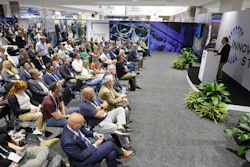
At AI Manufacturing Day from IIoT World, a panel on predictive maintenance believes the future of predictive maintenance is not about OEMs chasing hype but starting small and using data more intelligently.
Moderated by John DiPaola, the session brought together Thomas Kuckhoff from Omron, Sundeep Ahluwalia of TDK Sensei, Steve Blackwell from AWS, and Greta Cutulenco from Acerta to discuss how edge AI, sensing, and predictive maintenance are changing manufacturing operations.
No "one-size-fits-all"
The panel’s conclusion was that there is no universal KPI as success in predictive maintenance looks different for every manufacturer. Some operations want weeks or months of advance warning before a machine failure so repairs can align with scheduled maintenance windows. Others are less focused on the machine itself and more concerned with maintaining product quality for as long as possible before intervening. The strongest signal of success is whether operators and maintenance teams actually trust the system enough to use it as part of normal operations.
That point about trust came up repeatedly. Panelists stressed that predictive maintenance systems cannot overwhelm teams with noise, false positives, or abstract dashboards. Instead, the best solutions fit naturally into existing workflows and help people make better decisions. Avoided downtime, lower labor costs, and longer equipment life still matter, but those outcomes follow only after confidence has been established.
For OEMs, one of the most useful takeaways was the discussion around brownfield environments. Many manufacturers are not starting from scratch. They are working with plants, assets, and control systems that have been in place for decades. The panel advised companies to avoid “rip and replace” thinking. Rather than rewriting PLC logic or overhauling infrastructure, manufacturers should begin with non-intrusive data collection, using the protocols and systems already in place. The first step is often simply understanding what data already exists and building a baseline around a stable, well-understood asset.
The conversation also clarified that edge AI is not a one-size-fits-all architecture decision. Intelligence can live at several layers depending on the use case: Sensors and I/O are useful for high-fidelity signal capture; Controllers support rapid, deterministic responses; Gateways and industrial PCs can handle richer edge analytics; and the cloud remains valuable for model management, fleet-level learning, and enterprise-wide visibility. The panel’s advice was pragmatic: place intelligence where it can act quickly, securely, and with enough context to be useful.
More doesn't equal better
Another strong takeaway for OEMs was that more data does not automatically create better outcomes. What matters is the density and usefulness of the information collected. Panelists pointed to the importance of combining machine signals with maintenance logs, production context, and knowledge from experienced technicians. In many facilities, some of the most valuable operational insight still lives in the heads of long-tenured maintenance staff. As those workers retire, capturing that tribal knowledge becomes just as important as collecting vibration or temperature data.
The panel outlined a practical maturity curve that should resonate with OEMs and their customers. First comes condition-based monitoring, which detects changes in machine behavior. Then comes predictive maintenance, which estimates when failure may occur. The next stage is prescriptive capability, where systems recommend what to do next and may even integrate with CMMS, MES, or ERP systems to trigger actions automatically. The key is not to leap to the final stage too quickly. Companies that try to “boil the ocean” often stall out. Instead, the panel recommended a more disciplined path: start with a narrow, high-value use case, prove ROI quickly, and expand from there.
Predictive maintenance is maturing, but the winners will not be the companies with the biggest AI ambitions. They will be the ones who focus on real operating problems, work with existing plant realities, respect the people closest to the equipment, and deliver actionable insights instead of more noise.