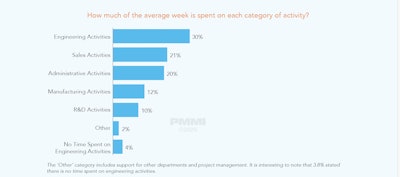
Engineering teams face critical workforce shortages and role expansion, with only 30% of engineer time spent on actual engineering work. OEMs can build resilient teams by codifying tribal knowledge, reducing non-technical tasks, modernizing training, and strategically adopting technology.
- Only 30% of engineer weekly hours are spent on engineering activities; the rest goes to sales support, documentation, and administrative tasks
- 40% of companies rely on databases for tribal knowledge, but documentation is often inconsistent or outdated as retirements accelerate
- Six proven strategies include: codifying knowledge before expertise walks out the door, offloading non-engineering work, building retention beyond pay, blending hands-on and digital training, adopting technology strategically, and outsourcing selectively
- 97% of companies use shop-floor training and 91% use mentoring, but advanced teams combine these with digital resources and structured timelines
- Companies investing in both people and processes—through knowledge capture, talent development, and digital transformation—position engineering as a strategic competitive advantage
It’s no secret that, over the past few years, engineering teams have found themselves stretched in new ways, with no relief in sight. PMMI Business Intelligence’s 2025 Engineering Best Practices report highlights the strategies forward-looking OEMs are using to stay competitive during an era of workforce shortages, rising complexity, and uneven digital adoption.
 PMMI Business Intelligence
At the same time, an aging workforce means critical institutional knowledge is at risk as decades of expertise are walking out the door at an escalating rate. Forty percent of companies rely on databases to capture tribal knowledge, yet interviews underscore that documentation is often inconsistent or outdated. Leaders cited upcoming retirements as one of their most urgent challenges.
Digital transformation is another mixed bag. While large OEMs are beginning to adopt tools like digital twins, AI-assisted design, and ERP–CAD integration, smaller manufacturers still rely heavily on spreadsheets and manual processes. One respondent summed up the struggle: “All this information needs to marry back together, and trying to find the software to handle it can be a challenge.”
But despite these pressures, the report shows strong momentum toward systematizing knowledge, developing talent pipelines, and prioritizing efficiency. The following six takeaways offer OEMs a roadmap for making engineering teams more resilient, productive, and future-ready:
1. Codify tribal knowledge before it walks out the door
 Documentation is the leading means of retaining tribal knowledge.PMMI Business Intelligence/2025 Engineering Best Practices
- Creating digital knowledge bases with searchable articles, photos, and video demonstrations—one company’s “KBA” system is highlighted as a model.
- Using structured mentoring, job shadowing, and cross-training.
- Standardizing resources, including SOPs, CAD templates, and troubleshooting guides.
2. Increase the percentage of time engineers spend on engineering
Engineers in many companies lose hours each week to administrative tasks, data entry, or sales activities. The report notes that “getting the most engineering out of the engineers” boosts both productivity and retention. Ways to achieve this:
- Offload administrative tasks to support staff.
- Improve internal processes and digital tools to reduce duplicate work.
- Clarify roles to prevent engineers from being pulled into non-technical duties.
3. Build a retention strategy that goes beyond pay
While 96% of companies say they offer competitive salaries, the most effective retention strategies combine culture, development, and recognition. Top tactics include:
- Investing in company culture, from social events to flexible work options.
- Creating formal career paths so employees can see long-term growth.
- Recognizing contributions—some OEMs credit engineers on machine nameplates.
4. Modernize training with structured, hands-on development
Training new engineers is overwhelmingly hands-on: 97% use shop-floor training, and 91% use mentoring. But the most advanced teams blend hands-on work with digital resources. Effective programs include:
- Structured mentoring timelines.
- Digital training materials (videos, SOPs, knowledge databases).
- Funding continuing education - 63% of companies reimburse tuition.
5. Adopt technology through a phased, strategic roadmap
While many companies still rely heavily on Excel, larger OEMs are implementing ERP/PDM systems, digital twins, and AI-assisted design. The report recommends:
- Stabilizing processes before introducing advanced tools.
- Building an integration roadmap rather than buying software ad hoc.
- Involving engineers directly in technology selection and implementation.
- Using simulation and digital twins for scalability and error reduction.
6. Outsource selectively, but capture the knowledge
Thirty-seven percent of OEMs outsource engineering tasks such as controls programming or documentation. But the most successful companies treat outsourcing as a targeted, temporary boost. Best practices include:
- Use outsourcing for niche expertise or overflow, not core competencies.
- Require structured documentation from external engineers.
- Integrate outsourced learnings into internal systems and standards.
The report reveals, above all, that departments that invest in both people and processes will thrive. The companies that are codifying knowledge, prioritizing training, reducing non-engineering workload, and planning digital transformation strategically are building stronger, more future-ready engineering departments. OEMs that follow these best practices aren’t just keeping up; they’re positioning engineering as a strategic driver of long-term competitiveness.