Pharmapack 2026 highlighted that user experience design, collaboration across teams, and sustainable packaging innovations are reshaping the pharmaceutical industry, with GLP-1 markets tripling to $60 billion.
- GLP-1 market growth: The GLP-1 segment tripled in two years, now valued at $60 billion, driving major innovation opportunities in biologics.
- User-centric design: Successful pharma packaging requires starting with user experience from the beginning, including early testing and cross-functional teamwork.
- Self-injection at home: Device developers must prioritize clear instructions and pain reduction as self-injection use reaches all-time highs.
- RFID technology impact: RFID-assisted processes reduced documentation time from 35 to 15 seconds, improving efficiency and data accuracy.
- Collaboration is key: Industry breakthroughs in efficiency, sustainability, and innovation depend on idea sharing, external feedback, and diverse expert involvement from project start.
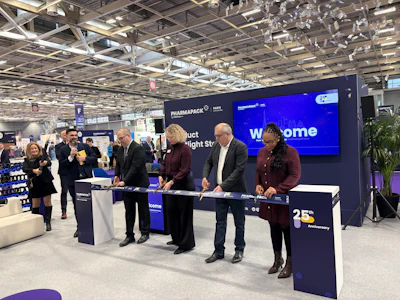
Pharmapack wrapped up last week with two full days of new product innovation, networking, and informative talks, sessions, and panel discussions on all the latest topics. This year the event celebrated its 25th year and ahead of this show, show producers declared the focus of the two-day event to be on GLP-1 innovation and sustainable packaging. And after attending, I can attest to this focus, but, there was a lot more.
I sat through several tracks on sustainable packaging as well as device and packaging innovations and learned of the many pressing issues our industry faces, as well as the new solutions rolling out to address them. I pared everything back to give you a quick list of my top takeaways from attending the show. Here they are:
1. Thoughtful packaging systems must factor in user experience from the start. Bob Scrase, Director of Industrial Design and User Experience at Phillips Medisize shared three tips for designing thoughtful packaging: 1. Start thinking about the user experience from the start. 2. Test early. 3. Thoughtful packaging requires cross-functional endorsement and teamwork.
2. Geopolitical shifts are redefining pharma’s global playbook. There is an ongoing U.S.–Europe debate on how shifting geopolitical forces are impacting pharma packaging and supply chains and how the sector must respond at scale. Jim Collins, President, Pharmaceutical Delivery Systems LLC shared that while the EU and US are vastly different, it’s important to have a regional strategy in place.
3. Growth in the GLP-1 market tripled in the last two years to a now $60 billion segment. The intense shift to biologics lays the groundwork for new opportunities for innovation.
 Bob Scrase, Director of Industrial Design and User Experience at Phillips Medisize shared three tips for designing thoughtful packaging.PMMI Media Group; Pharmapack 2026
4. The “User is the North Star.” Courtney Nicholas Sutton, Head of Portfolio Strategy at SHL Medical spoke on the important of designing for the user. She shared how her team leveraged Team Consulting to improve their pen device. The team used social media and formative studies to gauge user’s thoughts on products. She also stressed that the design & human factors departments were on the core project team from the start.
5. Consumers today have more interest in their own health, acting like the “CEO of their health,” said Andy Flockhart, UK MedTech lead at Deloitte in a panel discussion. This is indicative in the 50% of people in developed countries wearing connected devices. But with the rise in companies like Apple and the makers of the Oura ring in the space, should pharma companies take the lead on connected devices or let these consumer brands rule the segment?
 Geopolitical shifts are redefining pharma’s global playbook. PMMI Media Group; Pharmapack 2026
6. Self-injection use at home is at an all-time high. Antony Chuter, Patient Champion & Former Chair of the Board of Trustees, Pain UK said that with the rise of self-injection at home, there are two key factors to consider in device development: clear instructions and limiting the sense of pain.
7. Buy-in is crucial to make large innovations happen, like lofty sustainability goals. Regis Gautier, Executive Director, Packaging Development & Technology/ Environmental Sustainability Lead at AstraZeneca said, “When you want to achieve performance, you must integrate all teams and open discussion.” And, “having external feedback is super important; it’s how you maintain a long-term program in a moving environment.”
8. Inclusive design starts with deep research into the disease population. Lucy Baldwin from Ensera Design presented on the importance of understanding the lived experience of the end user to find ways to reduce complexity and improve the user experience.
9. RFID data collection is more than just gathering information, it is making sense of it. Dr. Emilien Folzer, Principal Scientist in the Drug Product Formulation Department of ten23 health, a CDMO company in Switzerland shared the successful results of a recent partnership. ten23 health partnered with BD and Crypto Pharma in a successful RFID label project that moved manual visual inspection to an RFID-assisted process. The result? Faster documentation (35 to 15 seconds), and significant time savings based on historical and experimental data.
 ten23 health partnered with BD and Crypto Pharma in a successful RFID label project that moved from manual visual inspection to an RFID-assisted process. PMMI Media Group; Pharmapack 2026
10. Industry growth in efficiency, sustainability, and innovation begins with idea sharing. Several sessions touched on the importance of collaboration, as well as looking beyond the category for inspiration, the goal of bringing in a full range of experts from the start, as well as concept evaluation early and often.