As consumer expectations around sustainability grow, food brands are rethinking product packaging. For Danone, that means balancing recyclability, product performance, and consumer experience while navigating a recycling system that’s still evolving.
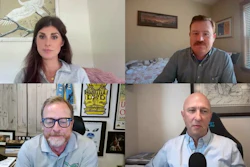
Paul Jenkins and Kory Nook, VP of Packaging Innovation and R&D at Danone, discusses the complexities behind yogurt cups and the company’s shift from polystyrene to PET.
(Responses have been edited for length and clarity.)
Packaging World: What are some of the things your team and you have to think about that won't be obvious to the average consumer?
Kory Nook, Danone: We balance food safety shelf life to ensure that we're delivering high quality products and high quality packaging. We have to make sure that it runs on our lines at high speeds. We even look at label inks and adhesives that ultimately won't hinder the recycling stream, and more importantly, consumer ergonomics.
We use How2Recycle to check on our yogurt pots as well. We train our developers to design for recyclability so that choices like label coverage or barrier layers don't unintentionally make yogurt pots detrimental to the recycling stream. Packaging contributes material to the product's carbon footprint, we also model the CO2 impact of changes, not just the cost.
We really laser focus on the consumer experience to make sure that we're delivering on product feel, then we invest in those things like labels as well as lidding.
What's one change that Danone has been working on that turned out to be more complicated than expected?
Our US transition from polystyrene to PET yogurt cups. PET is well recycled in bottles—it's got room to grow. But for thermoform PET cups, we really need the right infrastructure and guidelines to be accepted at scale. Today that's emerging.
The material change isn't just the tooling or a procurement switch, it touches barrier performance labeling. Our retailer systems and the recycling ecosystem needs to support that. Today in North America, polystyrene is not widely recycled, and we don't foresee a future where it will be widely recycled. Therefore, we need to get into a widely recycled material like PET and figure out how do we build that infrastructure and maybe even to the point where it can live and breathe with the PET bottles or does it need its own recycle stream?
How much do consumers influence the decisions you make on packaging? And do they always behave the way we expect when it comes to things like recycling and sustainability?
Consumers are a major input and consumer behavior expectations change day-by-day. Even if you think about the TikTok and Instagram and Facebook world, if you're not doing the right thing, that can get viral. That's why we have to continue to test for clarity. We also test with consumers.
We found consumers really expect it to be recyclable. If it's not recyclable and the product is something they cherish and must have, then they might have a trade off. But if that product is at an intersection where you've got competitors that offer similar things, you're recyclable versus they're not being recyclable. Consumers will make the decision for recyclables. It takes away the guilt of buying something in plastic because they can recycle it.
Customers don’t understand plastics and how you really need to have a little bit of both rPET and virgin material. People really care, but recycling rules vary by city and labeling can confuse them and ultimately it leads to a lot of wishcycling or conversely under-recycling, and they throw it in the trash. That's why we try to pair some of this insight with design changes and plain language guidance and external education programs.
You've said before that no one company can fix packaging on its own. Can you give an example of where working with others has really helped move things forward?
In the situation of the polystyrene yogurt cups and making a decision to switch to PET, we used the PET Recycling Coalition to help us understand where PET is going.
When we looked at the folks around us, we were able to connect a number of dots and say, yes, PET is the right place to be. We see other companies that are currently in polystyrene trays moving to PET. We've collaborated with folks like Driscoll's, Mondelez, and Kraft Heinz, where a lot of what they're doing used to be in polystyrene and now they're all moving to PET.
And as we move into PET, we feel even more confident that there's enough supply there to create a recycled stream. But at the same hand, we also need to ensure that we're all gonna put recycled content back into our packaging. So there's a demand pull and we can create that circular economy.
You work closely with your European counterparts—Europe is in a different place when it comes to sustainability and some of the other packaging trends. You work quite closely with them to work together for the greater good of the business and the environment.
We're constantly sharing insights, best practices, what are all the countries doing around the world? And we do see Europe at the forefront. So in many ways we look to them to lead and help and give us insights and guide us. And in some regards, they've also challenged us, if you look at countries like Germany, they're establishing polystyrene infrastructure and they have the ability to turn that into an end product. But the US is a bit of a different scenario. So where we can find commonalities on PET thermoform technology, we make sure we standardize those best practices so we can deliver the most efficient and effective solution for the consumer in the end market. But where there are differences in trade-offs, we have a healthy debate and ultimately ends up becoming a better outcome for both regions.
I think it is essential that you do look to other countries, look to the states within the US to figure out where the collective is going.
When you look ahead, what makes you the most optimistic about where packaging is heading over the next few years?
I'm really optimistic because we have clear roadmaps. We've got shared metrics. Specifically inside Danone, we've embedded this roadmap to a 100% recyclability, 30% version plastic reduction. A good decarbonization target into our RNI and brand plans with specific levers like lightweighting, designed for recyclability higher PCR content where markets allow in supplier decarbonization through science-based targets initiatives. External policy like EPR is aligning these incentive systems as well.
I truly believe there is a great future for packaging because at the end of the day we've got materials, we've got the community, we've got the right stuff to make a better future for people to be able to consume products, feel good about them, and then reclaim that value from the packaging and put it back into the system and create a better future for everyone.