Compostable packaging works best as a targeted solution for specific applications like food-soiled and small-format items, not as a universal replacement for conventional plastics. Success depends on proper infrastructure, certification, and consumer education about managed waste systems.
- Compostables are most effective for food-contaminated packaging, small formats, and items difficult to recover through conventional recycling (tea bags, coffee pods, takeaway containers)
- Infrastructure is non-negotiable—compostable materials only work where industrial or home composting systems exist and function properly
- Third-party certification (TÜV Austria, BPI) alone is insufficient; real-world validation with composting facilities is essential to bridge gaps between lab standards and actual operations
- Compostability and recyclability are not mutually exclusive; materials can be designed for both pathways when scale and collection logistics improve
- Consumer confusion around "home compostable" claims undermines effectiveness—clearer disposal guidance and managed waste education are critical to success
Compostable packaging has spent years caught between ambition and ambiguity. It has been promoted by some as a broad answer to packaging waste while dismissed by others as incompatible with recycling-focused circularity goals. But at interpack 2026, brands, material suppliers, converters, and compostability advocates threaded the messaging needle in their mutual stance that compostables are not a universal replacement for conventional plastics. They are a targeted solution for specific packaging problems, according to a Mars framing.
“We want packaging after the consumer uses our product to enter a managed waste system,” said Eric Klingenberg, materials science lead at Mars Advanced Research Institute (MARI). “We don't want it to go out in the environment. We don't want consumer to have to handle our packaging as waste by themselves. We want it to be a managed waste system and that's recycling, that's composting, no matter what.”
Speaking during a panel discussion at the Taghleef Industries booth titled The Real Alternative: Compostable Packaging’s Place in a Circular Future, Klingenberg repeatedly returned to the idea that it is important to consider opportunities to reduce packaging, look to reuse opportunities, and then design packaging for recycling/composting. It was emphasized that compostable packaging only works when paired with infrastructure, practical use cases, and realistic end-of-life pathways.
“I believe compostable packaging makes sense for small format food packaging, particularly in parts of the world where composting can be a circular end of life,” he said.
That narrower, more application-specific view of compostables was echoed throughout the discussion by Afsaneh Nabifar of Compostable by Design and BASF, Stan Haftka of Kaneka Green Planet, and converter Fabrizio Radice of Corapack. Rather than positioning compostables against recyclability, panelists described them as one tool among several in the toolbox. They said it’s particularly useful where food contamination, small format packaging, or difficult recovery conditions make traditional recycling impractical. As seen elsewhere in the Taghleef booth -Taghleef Industries displayed its Nativia D822 biaxially oriented PHA-based film at interpack 2026, positioning the home-compostable material as a next-generation option for snack and flexible packaging applications. Companies like Mars and PepsiCo are experimenting with these new products.
Compostables find their clearest fit in food-soiled and hard-to-recover packaging
Much of the panel focused not on replacing all packaging with compostables, but on identifying where compostable materials solve real operational problems.
For Mars, that starts with packaging formats that are already difficult to recover through conventional recycling streams.
“How do we design them to be recyclable first?” Klingenberg said. “Where compostable absolutely makes sense from a material size, right? A format and application? Then use compostables.”
He stressed that compostability and recyclability should not necessarily be treated as opposing concepts.
“It’s not that compostable materials can’t be recyclable, it’s we don’t have the scale today,” Klingenberg said. “Where we can get some materials and design formats that can be recyclable AND compostable? Focus on those because we can get recyclability first. Compostability is a second option.”
That “right-tool-for-the-right-application” approach surfaced repeatedly during the discussion.
Nabifar pointed to applications that already tend to enter organic waste streams regardless of material composition. Compostable packaging, she argued, can reduce contamination in those streams and improve organic waste collection.
“Tea bags, fruit stickers, and coffee pods are items that are frequently just intuitively by consumers put into the biowaste,” she said. “So they are there and if they are contaminating the biowaste, the best way forward is for them to be biodegradable and compostable in that environment.”
She also highlighted heavily food-soiled packaging formats that consumers are unlikely to clean before disposal.
“One clear example is, for example, a half-eaten lasagna takeaway packaging,” Nabifar said. “This is definitely not going to end up into recycling by many of the consumers because it’s paper and contains biowaste.”
Radice grounded those ideas in commercial packaging applications already on the market. Corapack, based in northern Italy, has worked with compostable flexible materials for more than 15 years.
“For us, compostable materials and compostable films make sense when the packaging, after use, will remain dirty, remain contaminated by the product inside,” Radice said earlier in the discussion.
He cited institutional foodservice packaging as one example where compostables simplify waste handling.
“We have a lot of customers using lidding film to close trays of ready meals for the distribution at the hospital, or for the distribution at the school,” he said. “Having the possibility to collect everything into the compostable waste as an organic waste helps a lot in the organization.”
Coffee capsules were another recurring example.
“Coffee capsules is another typical application where you have a part of organic powder after the brewing of your coffee and a part of plastic,” Radice said. “Today there is the technology to transfer the capsule body and the top lid film into compostable.”
The panelists also repeatedly emphasized that compostables are evolving technically beyond earlier limitations. Radice described compostable materials now reaching barrier and shelf-life performance levels that would have been difficult several years ago, including tests on aggressive condiment applications targeted by Europe’s Packaging and Packaging Waste Regulation (PPWR).
Still, panelists consistently avoided portraying compostables as a universal answer.
“It’s not like we’re going to design one package and it fits all solutions,” Klingenberg said. Afsaneh Nabifar of Compostable by Design/BASF (left) and Stan Haftka of Kaneka Green Planet (speaking) discuss certification, infrastructure, and end-of-life realities for compostable packaging during a panel discussion at interpack 2026. Maria Monique Murillo of Taghleef Industries moderated the session.
Infrastructure, certification, and consumer confusion remain major obstacles
If the panelists agreed compostables have legitimate use cases, they also agreed the success of those materials depends heavily on infrastructure and communication.
“I think the non-negotiable is the certification,” said Nabifar.
She stressed the importance of third-party certification systems such as TÜV Austria or BPI, but argued certification alone is not enough. Compostable packaging developers, she said, also need closer collaboration with the composting industry itself.
“At Compostable by Design, we believe that one can go beyond just getting a certification by trying to work closer with the composting and organic recycling organizations,” she said.
That includes validating packaging performance under real-world composting conditions, not only laboratory standards.
“There is a little misalignment between what the rule ... says, and what they are really doing,” Radice added, referring to differences between certification protocols and actual composting operations.
Infrastructure disparities across global markets emerged as another major theme — particularly for multinational brands like Mars.
“If you are thinking about Southeast Asia, where there are no industrial composting facilities existing, maybe thinking about putting an industrial compostable material on the market? Maybe it’s not the best strategy,” Nabifar said.
Instead, she suggested that home- or community-compostable formats may make more sense in regions lacking large-scale waste infrastructure.
Klingenberg expanded on that point from the perspective of global packaging development.
“We know composters out there use different processes,” he said. “They tweak their process depending on their feedstocks, they operate in different areas of the world with different temperature conditions.”
Mars has therefore been targeting home-compostability performance levels during material development, partly because it broadens compatibility across varying industrial composting systems.
“We’re designing for home compostability to meet shorter cycle times for industrial compostability and to meet a broader range of industrial composters,” he said.
At the same time, several panelists acknowledged the industry itself has contributed to consumer confusion — especially around “home compostable” claims.
“Home compostability is misleading,” Haftka said. “It doesn't mean you can destroy material at home.”
Radice was even more direct.
“I think that this kind of definition creates more problems than what it’s solving,” he said.
Consumers, he argued, often interpret “home compostable” to mean packaging can simply be discarded in nature—planted in the garden.
“People think that you can put [the packaging] in your garden and it will disappear in a very short time,” Radice said. “Guys, no.”
That confusion, panelists said, reinforces the need for clearer disposal guidance and stronger consumer education around managed waste systems.
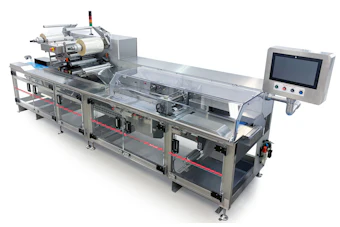
“We have to teach the people to collect and to manage properly the product,” Radice said. As seen elsewhere in the Taghleef booth - A high-speed flow-wrap package produced with Taghleef Industries’ Nativia Plus D823 biaxially oriented PHA film was displayed at interpack 2026 in collaboration with Cavanna Packaging Systems and Corapack. The home-compostable structure was designed for high-speed HFFS packaging applications. Brands like Mars and PepsiCo are putting these new films through their paces.
Compostability’s future may depend on scale and better communication
As the discussion closed, panelists repeatedly returned to a broader challenge: compostables still occupy a relatively small share of the global packaging landscape, while recycling dominates both public discussion and regulatory momentum.
“It seems recyclability has a better PR team than compostability,” moderator Maria Monique said, challenging the panel to explain why.
Haftka argued that much of that imbalance comes down to scale.
“The quantity of biopolymers is maybe less than 1% of the entire plastic consumption,” he said. “Simply more people talk about recycling than composting.”
But he also pushed back on the assumption that compostable materials cannot participate in recycling systems.
“The fact that it’s bio compostable doesn’t mean it’s not recyclable,” Haftka said. “Every bioplastic is always recyclable. The problem is there are two issues, the magnitude and logistical collecting.”
For Klingenberg, the broader opportunity lies in treating compostables as part of a wider portfolio of circularity pathways — not as a singular replacement strategy.
“We’re seeing new materials come out that enable circularity in ways that we didn’t think about before,” he said.
He also acknowledged that technical language and oversimplified messaging have complicated public understanding.
“We as scientists begin to use terms when we are formalizing our think about things, in many cases we’re still arguing and discussing these terms and specific meanings when they’re new,” Klingenberg said. “Often what happens is we get asked to simplify things quickly and we use these terms as scientist that are not interpreted the same way by non-scientist.”
The result, panelists suggested, is an industry now trying to recalibrate the conversation around compostables: less hype, more specificity.
For Mars and others on the panel, the future of compostables appears less about replacing every package and more about identifying where those materials genuinely belong — particularly where food contamination, small formats, and difficult-to-recover packaging make conventional recycling less practical.
“What are the opportunities today and how do we make those better steps today,” Klingenberg said, “but also what are the opportunities that could come tomorrow so we make a better step for the future?”