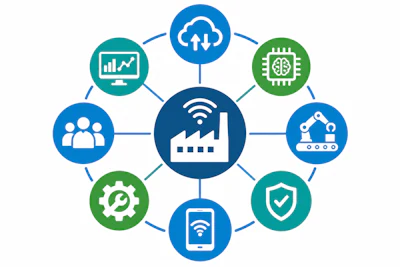
Digital transformation is often confused with specific technologies like cloud migration or AI, but it actually means fundamental changes to how an organization operates, delivers value, and competes. Success requires starting with clearly defined problems and agreed-upon terminology rather than selecting technology first.
- Three distinct concepts: Digitization converts physical to digital (paper to electronic records), digitalization improves existing processes (remote diagnostics), and digital transformation changes the operating model itself.
- Start with outcomes, not technology: Ask "What problem are we solving?" before selecting tools like AI, cloud platforms, or digital twins.
- Define terminology upfront: Common vocabulary prevents costly misunderstandings—a digital twin means different things to different stakeholders and must be clearly defined in requirements documents.
- Metadata and context matter: Raw data is useless without context; asset hierarchies, naming conventions, and common information models are essential for analytics and AI to function effectively.
- Success framework: Agree on the problem, define terminology, document definitions with ownership, and only then select technology when technology, people, process, and practice align.
Digital transformation may be the most widely used and least consistently understood term in manufacturing. Ask five people what it means, and you may get five answers: cloud migration, connected machines, artificial intelligence, digital twins, and/or predictive maintenance. A machine builder may mean remote monitoring and service; the customer may mean an enterprise-wide change in how production is planned and run.
All of these can be part of digital transformation. None of them defines it. When two organizations use one word to mean different things, a project begins with apparent agreement and very different expectations. Before anyone selects a technology, the team should agree on the problem and on what the words mean.
Digitization, digitalization and digital transformation
These three terms get used interchangeably. They should not be.
Digitization converts information from physical to digital form. Paper maintenance records become electronic records; a manually logged reading becomes sensor data.
Digitalization uses digital technology to improve an existing process. An OEM adds remote diagnostics, automates production reports, or uses condition data to schedule maintenance. The operating model stays the same; it simply runs better.
Digital transformation changes the model itself, altering how an organization operates, delivers value, decides, or competes.
The distinction matters because not every worthwhile project needs to be transformational. Replacing a clipboard with a tablet can be an excellent investment; connecting an isolated machine can improve support. Neither needs to be called transformation to be worth funding. Insisting otherwise pushes teams toward novelty and away from outcome.
Start from the outcome
Industrial discussions often open with technology: “We need a digital twin;” “We need AI;” “We need the cloud.” A better opening is, “What problem are we solving?”
For a packaging operation, the answer might be unplanned downtime, changeover time, quality, waste, or spreading specialist knowledge across sites. For an OEM, it might be commissioning time, remote support, service revenue, or feeding field performance into the next machine design.
Technology tends to reverse this order. Once an organization becomes interested in a technology, teams go looking for somewhere to deploy it, and the result is an impressive pilot that never becomes operationally useful.
Own the words before you own the tool
Definitions matter more as the technology grows more sophisticated. Take digital twin. Is a three-dimensional model a digital twin? A dashboard of live machine data? A model that predicts bearing failure? All can be valuable. They are not the same thing.
It helps to separate a model, which represents something; a simulation, which explores how that representation behaves under given conditions; a digital mirror, which reflects an asset's current state through data; and a digital twin, which combines representation, operational data, context, and behavior to support decisions across the asset lifecycle.
If the OEM promises a digital twin, the customer expects predictive simulation, and the supplier means a dashboard wired to machine tags, disappointment is guaranteed. The same applies to AI, edge, cloud, data fabrics, IIoT and even remote access.
Manufacturing has dealt with this problem before. One example is ISA-TR88.00.02-2022, Machine and Unit States: An implementation example of ISA-88.00.01. The technical report provides an implementation example for applying standardized machine and unit states. The significance extends beyond the states involved. When one machine builder calls a condition Stopped, another calls it Idle and a third uses Ready, those differences have consequences when machines are integrated into a line or their data is consumed by supervisory, analytics or enterprise systems. A common vocabulary reduces the amount of translation and interpretation required between systems.
Digital transformation needs the same rigor around vocabulary. Standardizing terminology gives everyone a common foundation for innovation. As data moves beyond the individual machine to line-level systems, MES, cloud platforms, digital twins and AI, the meaning attached to that data becomes as important as the data itself. Machines cannot negotiate ambiguous terminology the way people can.
Someone must own those definitions, and it should be the party that lives with the result. A machine builder may deliver the system, but the operator is the one who runs it for the next 20 years. When the vocabulary in a specification belongs to the vendor, so do the acceptance criteria, and the customer inherits a system defined in someone else's terms. Put the definitions in the requirements document and have both parties sign the same page. Ownership of the tool and ownership of the language belong together.
More data does not mean more knowledge
A second misconception is that transformation means pulling more data out of machines. Equipment generates enormous quantities of it, but data is useful only in context.
A reading of 180 degrees, for example, means little without knowing what is measured, in what units, in what operating state, against what expected range and whether you are reading from a sensor you trust. That matters most when data leaves the equipment that produced it. An operator reads P101_RUN instantly; an enterprise analytics platform has no such institutional knowledge and neither does an AI model, unless you supply the meaning.
Metadata, asset hierarchies, naming conventions and common information models all help provide this meaning. They may seem unglamorous next to AI, but without them, analytics returns sophisticated answers drawn from poorly understood data.
Respect the installed base
Transformation presentations often show perfectly connected plants full of modern equipment and standard interfaces. Real factories rarely look like that. A packaging line, for example, may pair new machinery with controllers and operating systems that predate it by decades, plus undocumented modifications.
Designing connectivity into new equipment costs far less than retrofitting it, but it also creates dependency. A machine that once needed only power and local controls may now depend on networks, identity services, cloud platforms, updates, certificates and outside providers. Every new capability comes with a question: What happens when it is unavailable? Cybersecurity, safety, reliability and maintainability all play into how this question is answered, and they should all be part of one conversation.
Technology, people, process and practice
Ambiguity is so common in digital transformation initiatives. The most useful way to remove it is to stop defining transformation by the technologies involved. AI is not digital transformation. Neither is cloud, a digital twin, an IIoT platform or a connected machine. Those are tools. Transformation happens when technology, people, process and practice combine to produce real change in capability or value.
These initiatives need a disciplined workflow: Agree on the problem, agree on the terminology, write the definitions down, name who owns them and define the outcome. Then and only then should you choose the technology.
Vocabulary may sound like a small detail next to the technology. It is far from it. When everyone starts with the same understanding of what is being built and what success looks like, the odds that a promising project becomes a useful capability rise sharply.