Humanoid robots are advancing into industrial settings through onboard safety monitoring systems, AI-powered training that improves performance over time, and dexterous human-like hand grippers that handle complex tasks traditional grippers cannot.
- Onboard Safety Systems: NVIDIA's Halos for Robotics enables real-time safety monitoring and decision-making directly on the robot, allowing flexible deployment across multiple factory stations.
- Industrial Training Ground: Boston Dynamics uses factories as ideal testing environments where robots improve through AI-powered learning, becoming more capable with complex tasks over time.
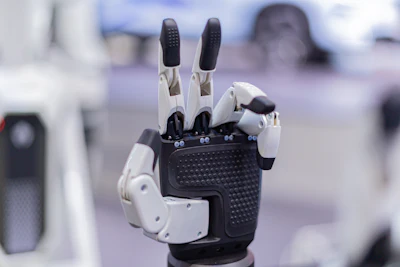
- Human-Like Hands: Dexterous five-finger grippers outperform parallel jaw and suction grippers on deformable objects and complex-shaped items, reducing need for specialized tooling per task.
- Cost Reduction: One versatile humanoid with human-like hands can replace multiple specialized robots and grippers, lowering overall automation costs.
- Future-Ready Strategy: Companies investing in dexterous hands now are positioning for scalability and flexibility as humanoid technology matures over the next five years.
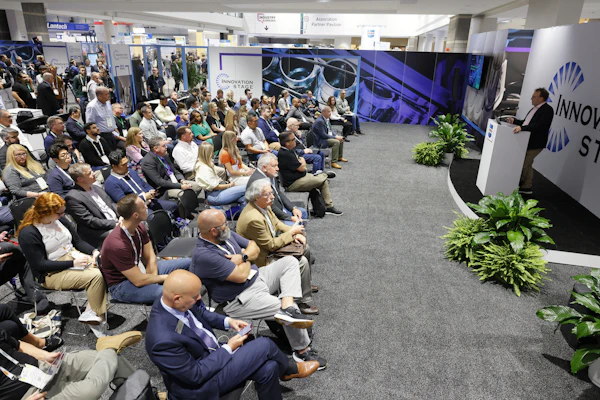
At the Automate 2026 Humanoid Robot Forum Tuesday in Chicago, speakers outlined several factors that could determine how humanoid robots move into industrial environments, from onboard safety monitoring to the use of industrial settings as a training opportunity. Here's what they had to say:
Advancing humanoid safety across tasks
Humanoid robot safety protocols are difficult to define across applications due to their flexibility, but industry collaboration can be a path to progressing safety standardization, speakers at the Humanoid Robot Forum explained. (L to R) Amit Goel of Nvidia, Jimmy Nassif of Idealworks, Deepak Pathak of Skild AI, David Reger of Neura Robotics, Pras Velagapudi of Agility.Packaging World
“One of the biggest unlocks with a humanoid form factor is that it’s a mobile manipulation platform that I can move between stations with the same robot,” Pras Velagapudi, CTO at Agility, explained at the event. Considering safety for that workflow, though, “you can’t be reasoning about safety in terms of each of these stations independently,” Velagapudi said.
While work cell-based safety can create rigorous standards in that part of the operation, it can be limiting for a flexible system like a humanoid.
“Being able to bring that safety more onboard the robot and combine it with onboard safe motion computation and safe perception to make those decisions in real time really is an unlock that lets you add together the value of multiple workflows in a way that’s difficult for other automation platforms,” Velagapudi said.
Industry as a general-purpose humanoid training ground
As Boston Dynamics works toward achieving general purpose robotics with its Atlas humanoid robot, the company is focusing on industrial applications first, Aya Durbin, director of product at Boston Dynamics, shared at the Forum. Aya Durbin, director of product at Boston DynamicsPackaging World
“[Industrial stakeholders] have a history of deploying breakthrough technology. You have active applications that don’t require research breakthroughs to achieve,” Durbin said. “I want the pressure from this market to make sure that we deliver safe and reliable robots. In the humanoid community, we need to be pressured to provide positive ROI to you.”
As the technology scales in industrial settings, AI-powered training will enable improvement over time, Durbin added.
“Your robot will be the worst it will ever be on the very first day you get it in your facility,” she said. “Not only will you get to take advantage of economies of scale for your hardware and drive down the cost, but you actually get a robot that can take on more complex tasks over time.”
The case for dextrous hands
One of the most critical attributes of a humanoid robot, the piece that often interacts most directly with the operation, is the hand.
Humanoid robot suppliers at the Forum outlined what industrial stakeholders are (L to R) Brian Heater of A3, Aadeel Akhtar of Psyonic, Bren Pierce of Kinisi, Olivia Norton of Sanctuary AIPackaging World
“It’s very task dependent. There are a lot of tasks that have been automated on factory floors with parallel jaw grippers and suction grippers, but a lot of the tasks where people found that those are inadequate are where there are deformable objects. For example, with a Twinkie, if you grip it too hard, you crush it, but if you don’t grip it hard enough, it slips out,” explained Aadeel Akhtar, CEO of PSYONIC.
Complex-shaped objects or different tasks requiring changeovers to new tooling can also cause challenges, Akhtar added. “If you can have one hand that can be generally used across all of these different tasks, that can reduce a lot of the costs that are associated with needing a specialized gripper for a specialized task,” he said.
While simpler grippers can be a functional solution today, some companies are looking at dexterous, human-like hands as a future-forward solution, according to Olivia Norton, co-founder and CTO of Sanctuary AI.
“[Companies seeking out human-like hand grippers] are thinking about their strategy five years out. There’s opportunity for our simple grippers now, expanded opportunity for those simple grippers given some of the characteristics of physical AI, there are opportunities for simpler hands with a lower degree of freedom, but the full complement of human-like capability is encompassed by a hand with a high-degree of freedom,” Norton said.
She added that while dexterous, human-like hand grippers can always be used in a simpler way, “Once you have that capable, low-cost, robust system, it ends up being the gravity well for variability within industrial applications.”
(See what speakers had to say during day two of the Humanoid Robot Forum)