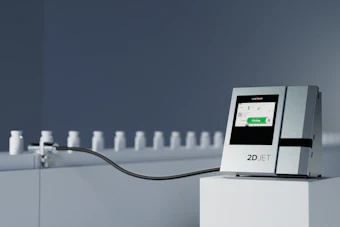
Swedish dairy farm Wapnö adopted an IQJET continuous inkjet printer to reduce waste and environmental impact while maintaining reliable product marking. The system cuts solvent consumption by 43.8 liters annually compared to traditional industrial printers.
- Solvent savings: IQJET uses 2.7 mm/hr versus 6-10 mm/hr in typical systems, saving up to 43.8 liters annually in three-shift operations
- Energy efficiency: Operates at only 36 watts using an adaptive pump system that responds to real-time production demand
- Closed ink circulation: Nozzle seals during pauses to prevent ink drying and reduce manual cleaning, with built-in recovery returning evaporated solvent to circulation
- Modular service design: Individual wear parts replacement reduces service costs and downtime critical for perishable goods production
- Environmental compliance: Inks meet REACH and RoHS standards with options for low volatile organic compounds or MEK-free formulations
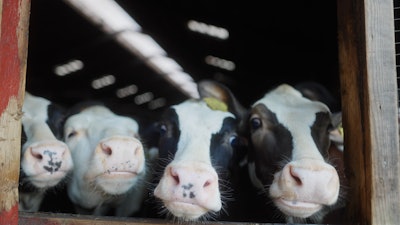
At Wapnö farm in Halmstad, Sweden, sustainability isn’t an add-on; it’s embedded in every aspect of production. From its on-site biogas plant and regional distribution model to its integrated dairy, brewery, and greenhouse operations, Wapnö continually seeks to reduce waste, energy use, and environmental impact. That same philosophy now extends to its product marking system, where the farm has adopted the IQJET continuous inkjet printer from Leibinger to improve efficiency and reduce resource consumption.
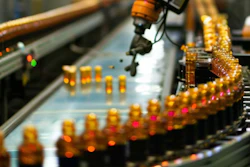
After trying several coding and marking systems that failed to meet expectations, Wapnö selected the IQJET based on its ability to withstand a its harsh environment while aligning with the farm’s long-term sustainability goals. The printer is now used across a variety of packaging formats—milk cartons, yogurt cups, beer cans, and glass bottles—delivering reliable batch coding and best-before date marking essential for product traceability.
 A carton of Wapnö milk receives its batch and best-before code using the IQJET continuous inkjet printer.Leibinger
One advantage of the IQJET is its closed ink circulation system, which seals the nozzle during production pauses. This prevents ink from drying out and reduces the need for manual cleaning, allowing the printer to remain ready for operation at all times. The system also minimizes solvent loss during downtime, due to a built-in recovery feature that returns evaporated solvent back into circulation. According to Leibinger, solvent use is limited to 2.7 mm/hr, compared to 6 to 10 mm in typical industrial systems—an annual savings of up to 43.8 L in three-shift production settings.
Wapnö also benefits from the IQJET’s modular service design, which allows for the replacement of individual wear parts rather than entire print modules. This reduces both service costs and downtime, which is critical in fast-paced production environments dealing with perishable goods.
 | Read this related article, “Metering System Solves Date Coding Woes for Olly Containers” |
From an energy standpoint, the IQJET operates at 36 watts through the use of an adaptive pump system that responds to real-time demand. The printer’s cartridge system also ensures complete use of consumables before replacement, avoiding unnecessary waste. Inks used in the system meet current REACH and RoHS safety and environmental standards, with options available that are low in volatile organic compounds or free of MEK (methyl ethyl ketone)entirely.
By adopting the IQJET from Leibinger, Wapnö has not only solved a persistent production challenge but also strengthened its commitment to operating responsibly. The printer’s ability to combine reliability, efficiency, and low environmental impact makes it a strong fit for a company where every operational decision supports a larger sustainability mission. PW