Cybersecurity decisions are increasingly made during procurement, shaping equipment long before it reaches the plant floor. According to PMMI’s Securing the Line: Managing Cybersecurity in Packaging and Processing Operations white paper, expectations set while equipment is specified can influence the components chosen, the communication architecture, access permissions, and how well a supplier can support the machine after installation.
When those expectations surface late, they tend to cost time. Session participants described equipment that arrived with a remote-access arrangement that did not match the plant’s requirements, forcing teams to rework the access approach and network configuration. Settling controls-platform and program-access questions while specifications are still being written, participants said, can head off that kind of rework.
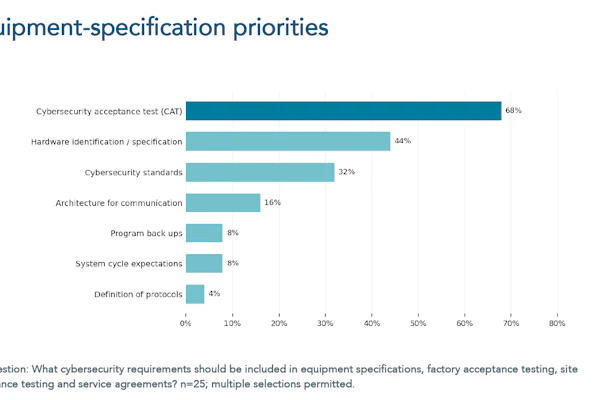
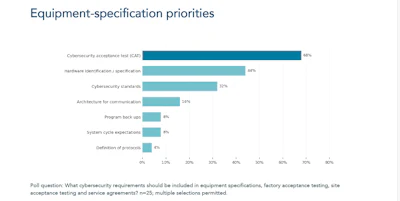
One priority rose above the rest. In a live multiple-selection poll, a cybersecurity acceptance test was the most frequently chosen equipment-specification requirement, selected by 68% of respondents. The goal is to confirm that agreed cybersecurity requirements have actually been implemented, checking the relevant equipment and connectivity before a machine is treated as ready for operation, alongside established factory and site acceptance testing.
Other priorities trailed well behind. Hardware identification and specification drew 44%, cybersecurity standards 32%, and communication architecture 16%.
Taken together, participant priorities pointed toward a broader definition of equipment readiness. The question is not only whether a machine performs its intended function, but whether its connections, components, and access arrangements fit the environment it will run in.
That standard does not end at installation. Participants noted that requirements set at purchase do not stay fixed across a production asset’s life, as software versions, firmware, controls hardware, and supplier support all change. Aging controllers and unsupported software can be difficult to patch or replace without cost or disruption, and security updates need careful testing so they do not degrade equipment performance.
For OEMs and component suppliers, the message is that cybersecurity has moved upstream. Building it into specifications, acceptance testing, and long-term support plans gives end users a common starting point and gives suppliers a clearer, more consistent set of expectations to design and service against.
SOURCE: 2026 Securing the Line: Managing Cybersecurity in Packaging and Processing Operations
For more insights from PMMI’s Business Intelligence team, find reports, including Securing the Line: Managing Cybersecurity in Packaging and Processing Operations, The Formulation Effect: Impacts on Food & Beverage Production, Equipment and Investment, and Robotics in Packaging & Processing at https://www.pmmi.org/business-intelligence.
Download the FREE report below.