Manufacturers should plan for sustained 15-20% tariffs as the new baseline and focus on supply chain transparency, claiming available IEEPA refunds, and preparing for potential robotics tariffs, while understanding that USMCA no longer provides protection against Section 338 tariffs.
- 15-20% tariffs are now the baseline—some industries face 25% or more, with no expected relief as tariffs remain a primary policy tool.
- USMCA compliance provides zero protection against Section 338 tariffs, requiring immediate classification audits for affected supply chains.
- $100 billion in IEEPA refunds remain unclaimed—importers of record should file legal claims and establish ACE portal accounts to recover owed duties.
- A robotics tariff investigation is underway—potential 2026-2027 action could significantly impact manufacturers relying on imported automation equipment.
- Supply chain transparency is now mandatory—CBP is expanding audits and requiring documented visibility beyond tier-one suppliers for compliance and competitive advantage.
Shawn Jarosz doesn't sugarcoat it. The founder and chief trade strategist at TradeMoves LLC opened her presentation at PMMI's Annual Meeting in Montreal with her familiar disclaimer: "Sometimes I feel like the Debbie Downer. I bring not a lot of good news."
What she brought instead was clarity. In a landscape where tariff policy has browbeaten manufacturers for two years, Jarosz laid out what's changed and what companies should do right now. Here are five takeaways every OEM needs to hear.
1. 15–20% tariffs are the new baseline
The chaos of 2025 has given way to something arguably more manageable. "Tariffs have been relatively stable in 2026 compared to 2025," Jarosz said. "The volatility in 2025 was like we'd never seen."
Courts invalidated IEEPA tariffs, and Section 122 tariffs expired after five months. What remains is a layered structure of Section 301, 232, and 338 tariffs, and Jarosz told the room to stop waiting for relief. Her guidance to clients is to plan for a sustained tariff burden of 15–20%, with some industries facing 25% or more as pending investigations conclude. President Trump, she noted, "is going to continue to have tariffs as his number one trade policy tool."
2. USMCA won't save you from Section 338
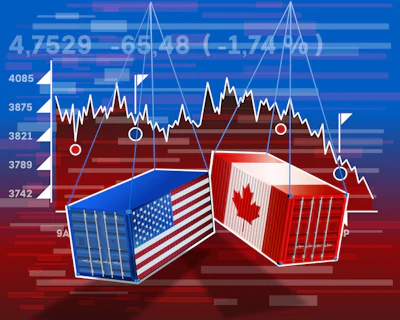
For Canadian manufacturers and their US buyers, Section 338 is the new wildcard. Applied for the first time in US history against Canada, these tariffs target goods the administration claims face discriminatory trade barriers in the Canadian market. The rate is 50% on select tariff codes.
The critical detail Jarosz emphasized is that USMCA compliance provides zero protection here.
For companies that structured their supply chains specifically to leverage USMCA duty-free access, this is a material exposure that requires an immediate classification audit.
3. Claim IEEPA refunds
There's money on the table, and not everyone is collecting it. Of the $166 billion CBP collected under the now-invalidated IEEPA tariffs, roughly $100 billion has been processed for refund. But Phase 3 of the process—covering finally liquidated entries—has hit a procedural wall because importers of record may need to file suit at the Court of International Trade before accessing their refund through the ACE portal.
Jarosz's advice was direct. If you acted as importer of record and paid IEEPA tariffs, get legal counsel, establish an ACE portal account with ACH direct deposit, and figure out what you're owed. And if you weren't the importer of record, start that conversation with whoever was. "How are you negotiating with that importer of record to potentially get a refund?" she asked, noting this isn't a rhetorical question.
4. A robotics tariff could hit the industry twice
Jarosz flagged a threat that hasn't landed yet but deserves attention now: an active Section 232 investigation targeting robotics and industrial machinery. The investigation aims to push advanced manufacturing back to the United States. The unintended consequence for OEMs would be significant.
"If the United States is going to hit the machines that we need to manufacture the machines we make in the United States, that could put a great deal of stress on our industry," she said.
She expects potential action in 2026 or 2027, targeting specific countries. Companies that rely on imported robotics or precision automation equipment in their production processes should model that scenario now, not after it hits.
5. Supply chain mapping is no longer optional
The shift that may carry the longest operational tail isn't any single tariff action, Jarosz explained; it's the enforcement posture behind them. Executive Order 14411 directed the Department of Homeland Security (DHS) and U.S. Customs and Border Protection (CBP) to increase scrutiny on forced labor, transshipment violations, and duty evasion. The expectation now is that companies need to know their supply chain beyond tier one.
CBP is expanding audit activity, tightening importer-of-record eligibility requirements, and signaling that documented supply chain transparency will become a baseline compliance expectation. The companies that do the work now, Jarosz argued, will be better positioned not just for compliance, but as trading partners. "It's gonna become a competitive advantage because you're doing the work to be able to show your supply chain that you take compliance seriously," she said.