CPG manufacturing leaders recommend three operator training strategies: empowering operators to create their own standard operating procedures, using video reminders for knowledge retention, and collaborating with OEMs through kick-off training and train-the-trainer programs.
- Operator-led SOPs: Allow operators to write their own procedures during training, increasing ownership and compliance across multiple plants and locations
- Video reminders and repetition: Use tablets and mobile devices to deliver procedure videos that help operators retain complex system knowledge over time
- OEM collaboration: Partner with equipment manufacturers for initial kick-off training and develop train-the-trainer qualification programs to build long-term internal expertise
- Standardization with localization: Balance consistent procedures across sites while adapting for language, regional differences, and plant-specific requirements
- Knowledge retention: Repeated exposure to training materials, especially through video, helps operators internalize procedures for automated and digitalized equipment
As manufacturing equipment evolves and grows more complex, CPGs must consider whether their operator training meets the moment.
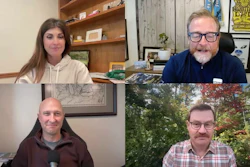
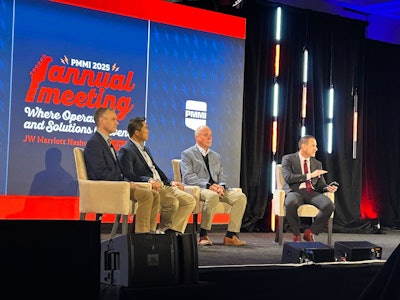
That's why CPG leaders from Pittston Co-Packers, The Marzetti Company, and Flowers Bakeries shared their strategies to better train operators for modern machinery at PMMI's Annual Meeting Tuesday in Nashville, Tennessee. These leaders offered new ways to consider internal training methods, as well as ways OEMs can offer support.
Standardization versus localization
Every manufacturing plant is unique in some way. That's why when training across several plants, operators need to consider the balance between standardization and localized considerations between sites.
One way to strike that balance is to empower operators, John Holzemer, CEO at Pittston Co-Packers, explained at the event. Drawing on nearly 50 years of experience at The Coca-Cola Company, he highlighted the importance of operator-led SOPs.
“Some suppliers have canned SOPs, but what I’ve found is really important is that the operators, during their training, can go out and write their own SOPs. Now that they’re part of it, they feel like they own it, so it makes it much easier for operators,” Holzemer said.
Scaling that strategy for a larger company takes some adjustment, but the benefits of team-level ownership remain.
“Taking across multiple places and looking at globalization, you have to consider all the different languages you have to do it in as well. Coming from Coke, we had plants in almost every country, so there was always that adaptation,” Holzemer added. “But getting the operator, the associates to feel like they’re a part of it and they own it, they’ll work it much better.”
Consistency through reminders and repetition
ensuring operators retain knowledge in an era of highly automated and digitalized equipment can mean integrating technology thoughtfully, Jeff Shura, SVP, engineering and technology at Flowers Bakeries, explained at the event. Shura noted that reminders and repetition can help to make complex systems more accessible.
“We all have [tablets and mobile devices], and we all use them to drive on Google Maps or Waze to get where we get, and we don’t remember anymore. We really want [procedures] to stick with our operators so they understand day in and day out, but the reality is they’re probably going to use some type of device and they’re going to need to be reminded frequently," Shura said.
Videos can be a great tool to implement these reminders and cover every step of a process, Shura added. When installing new equipment and working with OEM service technicians, his team will ask to video the process for future reference.
“It doesn’t have to be perfect, but it has to be good enough that it reminds you what to do,” Shura said. “We want [operators] over time, after maybe the 15th time they watch it, to say, ‘Oh yeah, I remember what to do here.’”
Looking to OEMs for support
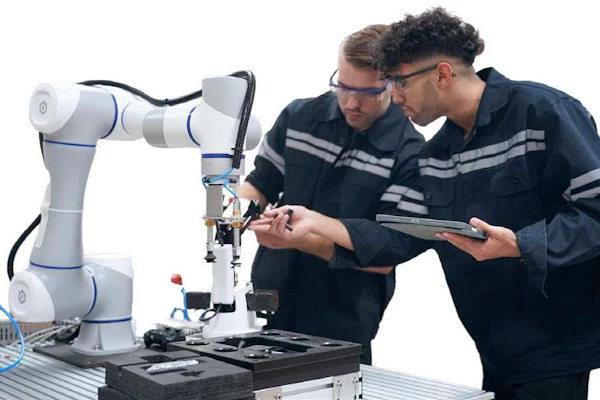
Training operators on complex new machinery doesn't have to be a lonely effort; CPGs and OEMs can collaborate to make training smoother and more valuable, James Li, vice president of engineering at The Marzetti Company, said at the event.
Li described two useful ways CPGs and OEMs can collaborate. First, he suggested a kick-off training session upon installation.
“The OEM is basically the subject matter expert of the machine and how it functions. They know how it functions, and can give us a one-on-one course, packaged together as part of the delivery of the machine,” Li said.
CPGs and OEMs can also generate long-term expertise with a “train the trainer” mentality.
“We do have a receiver in our network to receive that training. But how do we qualify it? We have to generate a document. So if the OEM has a qualification list for their own trainer and can give it to us, we can build our expertise," Li said. "It’s just a starting point; we’re not asking for 100% perfection here. We’re asking for something to get started, and we will build the rest of it to our company’s needs. That’s a negotiation I think we can have in the early contractual stage to discuss that.”