Manufacturing plants are shifting from manual material handling to fully autonomous systems that connect production and warehousing as one seamless flow, with autonomous robots replacing forklifts and carts while maintaining human workers in higher-value roles.
- Rockwell Automation's Twinsburg plant saved $162,000 in the first phase by replacing manual cart moves with autonomous mobile robots, paying for itself in less than a month
- Phase two improvements included 50% reduction in work-in-process inventory, 20% efficiency gains, and freed-up floor space through connected orchestration systems
- Manufacturing is moving faster toward autonomy than warehousing, with growth focused on material movement to and from production lines rather than through-line automation
- Experts predict forklifts will disappear from plant floors within 5-10 years, similar to how articulated robots eliminated hand welding in auto manufacturing
- Key barriers to full autonomy include truck loading logistics, digital twin adoption requirements, and IT infrastructure needed to connect robots, forklifts, and production systems
Greg Gernert has visited some of the most automated plants in the world, but he said the end of the line often looked a lot like it did decades ago. Someone on a forklift picked up a pallet, and on the next line over, someone pushed a cart. Not exactly the epitome of automation.
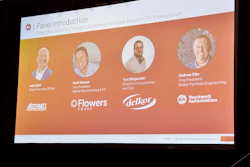
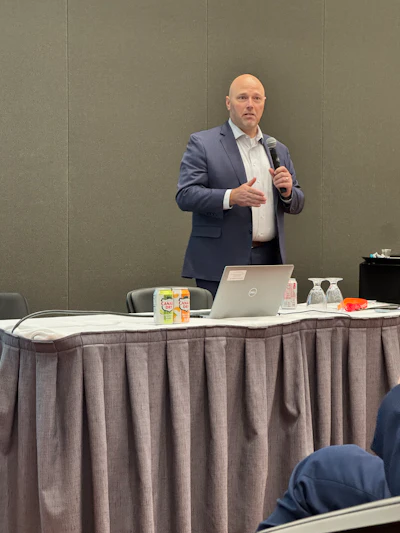
“Even in those most highly advanced manufacturing facilities, there’s still opportunity,” Gernert, Rockwell Automation’s vice president of production logistics and technology integration, said at an Automation Fair press conference.
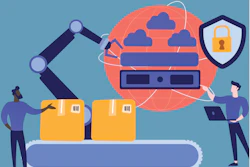
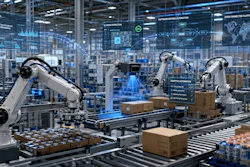
The idea is to treat production and warehousing as one connected material flow, with autonomous robots moving goods between them.
Why now?
Gernert said the pressure started with COVID when converters that had been making toilet paper for institutional customers suddenly had to switch those lines to consumer packs. Many found their lines weren’t built to change that quickly. Now GLP-1 drugs are causing a similar shift in food, as more consumers buy single-serve protein packs.
Labor is also a factor, along with the data silos that remain even in well-connected plants. Gernert said most manufacturers he works with are at the “connected” stage. The goal is to become predictive first and eventually autonomous.
He explained autonomy with a car comparison most people understand. A Tesla senses what’s around it, decides what to do and acts. An AMR on the plant floor follows the same pattern. Next, he said, the machine itself will need sensors, make decisions at the machine and line level and act on its own, with a person involved when needed.
Where OEMs come in
Rockwell divides production logistics into simulate, orchestrate, and move. The simulate step is the one most relevant to machine builders today.
“Many of the largest end users today are requiring their original equipment manufacturers to deliver not only the machine but a digital twin of the machine,” Gernert said. Those customers expect to use the model for the life of the asset, not only during commissioning.
He also gave a packaging example of a food and beverage customer that wants to extend unattended operation from two hours to four, then eight, then a full shift. To do that, raw materials and packaging film have to reach the machine automatically, and someone has to solve how a packaging machine changes its own film roll.
For orchestration, Rockwell recently launched FactoryTalk Orchestration. Gernert said customers asked for it after the AMRs went in, because they needed one system to coordinate robots, forklifts, and the people still pushing carts.
Rockwell’s own results
Rockwell tested this at its Twinsburg, Ohio, plant. In the first phase, AMRs replaced manual cart moves and saved about $162,000. Gernert said the project paid for itself in less than a month and nobody lost their jobs. The people who had been pushing carts moved into direct production roles.
The second phase, about four to six months later, connected the AMRs to FactoryTalk Production Center, Rockwell’s MES, so material arrived where and when the schedule needed it. Gernert said work in process fell 50%, efficiency rose 20%, and the plant freed up floor space. Most of the time between phases went to IT infrastructure and to finishing the orchestration software, which was still in development.
A third phase is underway, and Rockwell plans to start bringing customers through Twinsburg in January. Material movement in Twinsburg and at Rockwell’s Singapore plant is now largely autonomous from component storage to assembly and from assembly to finished goods. The exception is getting product onto the truck.
Gernert said truck loading is still the hardest step. Trailers can be floor-loaded or palletized, pallets vary in size, loads lean, and a robot has to work safely inside a trailer. “It is coming,” he said, “but there’s a lot more dynamics in that space.”
To the line and away from it
Asked whether manufacturing or warehousing is moving faster toward autonomy, Gernert said manufacturing is ahead. Packaging has automated “through the line” work for decades. The growth now is in moving material to the line and away from it, the forklift and cart work that sits between machines. Some new plants are being designed with warehousing and manufacturing in the same building, so there is no forklift handoff between them.
Gernert’s forecast was specific. “I believe you will not see people driving forklifts in a plant in the next five to 10 years,” he said. He compared it to the articulated robot, which ended hand welding in auto plants.