The End of the Line podcast discusses PACK EXPO innovations including Walmart's automated pallet-breaking systems driving renewed use of adhesive dots for layer stability, AI-powered compliance verification tools that flag labeling errors, and emerging cybersecurity threats where hackers have targeted freezer systems at military bases, supermarkets, and blood banks by exploiting exposed controllers and default passwords.
- Pallet Innovation: Walmart's automation of pallet breaking and rebuilding has revived adhesive dot technology to create straighter, more dimensionally precise pallets that meet tighter specifications.
- AI Compliance Tools: GlobalVision's Verify Comply system uses AI to check packaging artwork for allergen disclosures and nutrition facts compliance, flagging potential issues for human review.
- Cybersecurity Vulnerabilities: Recent hacking incidents targeted freezer systems at U.S. Army bases, supermarkets, and blood banks by exploiting exposed internet-connected controllers and unchanged default passwords.
- Prescriptive AI Detection: Advanced inspection systems now go beyond preventative and predictive capabilities to identify root causes upstream, such as pinpointing failing bearings based on product defect patterns.
- Mitigation Strategy: Manufacturers must establish cybersecurity plans, emergency procedures, and workplace cultures where employees report suspicious activity rather than assuming connected technology eliminates risk.
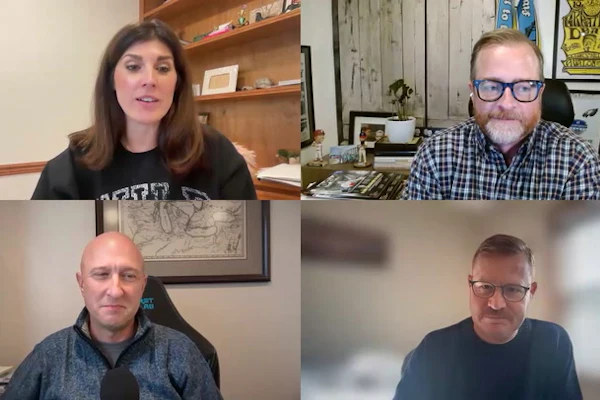
Liz Cuneo: Hello, everybody, and thank you for joining us for another End of the Line video podcast, where all of us PMG editors sit down and talk about the things that have come across our desks this week. I am Liz Cuneo, editor in chief of Healthcare Packaging. Joining me are Derrick Teal, editor of ProFood World, Sean Riley from OEM Magazine, and Matt Reynolds from Packaging World.
This week, we are, of course, still digging out of PACK EXPO stuff as we covered the show and created all of our dozens of videos. Matt, you mentioned having some PACK EXPO innovations you want to share with us. What have you been seeing? What looks cool?
Matt Reynolds: These are innovations that may have been more cutting edge years ago. They just never had as much of a reason to get adopted deeply into the industry until more recently. You guys may remember, this year and late last year, Packaging World's been covering Walmart. At their distribution centers, they were taking in what they call single-SKU pallets, breaking those down and building mixed pallets that are designed specifically for one aisle of a Walmart in Topeka, Kansas.
If it's a personal care aisle, it'll have all the Crest, all the Unilever products, all that kind of stuff, but in the right amounts for that specific aisle. So they're taking in full pallets, breaking them down with robotics, layer by layer, and then rebuilding pallets that are designed specifically for one aisle at a time, or two aisles at a time, whatever the number is. Historically, they've done that. That's not particularly new.
What's new is Walmart has automated that process significantly. That puts a lot of different strains on transport packaging, really, the pallets and the secondary packaging, especially if you're removing the pallets layer by layer with compression force as opposed to human hands, with the dexterity people have versus end-of-arm effectors, that sort of thing. Under that new regime at Walmart—and it's the 800-pound gorilla; when they move, everybody moves—there's a technology that we're seeing a lot more of that's coming back into the fore.
You may remember, when you're building pallets, often people will use slip sheets in between products, keep them from moving around, protect them a little bit. More and more, companies like Henkel Adhesives, Robopac is another one, Jowat is another—these were all at PACK EXPO—have done tiny adhesive dots that are between pallet layers. It really was a very nice product that kept the pallets from moving around and kept them very stable, and there were great use cases for it.
But now, with Walmart's very tight specifications for pallets, and the specs actually getting narrower and narrower, brands who are shipping product, out of necessity, have to be much more careful with the dimensions and the size and the pallet patterns and all these things, such that Walmart's automation can handle it. Even though these adhesive dots—I don't even know the name for the technology—that were used instead of for closing cartons, which is what we think of for adhesive, but for tying together different layers of a pallet, that's existed for a while.
But now they're being used again to create straighter, more perfectly dimensional pallets that are much more palatable, forgive the pun, for Walmart with their tighter spec. Kind of like what's old is new again. There's a new brand awakening to the fact that to serve Walmart better, they need to have better transport packaging. You're seeing all those companies I mentioned. Signode is another one with some of their straps and some of their strapping and pallet handling.
From a wider perspective, pallet handling, pallet building, and being very precise with that because of Walmart's new automation needs has come back into the fore again. Something that doesn't sound sexy when you talk about all the new innovations at PACK EXPO, but this is one that really will have far-reaching implications and impact.
Liz Cuneo: Interesting. That's pretty cool. I thought of glue dots when you mentioned the little adhesive dots, which maybe is a similar product.
Matt Reynolds: It is. Just think of a nozzle that prints either a bead or however they're closing the carton on your—I mentioned Crest already—your Crest toothpaste carton. Whether that's a bead or whatever the pattern is, instead of applying it to carton closing, they're applying it to pallet locking. We'll be seeing more of that, I'm sure, going forward.
Liz Cuneo: Now, is there—
Sean Riley: I'm sorry, I was going to say the same thing.
Liz Cuneo: You go. You can ask it, Sean.
Sean Riley: I just thought the same thing. Are there sustainable implications, not using slip sheets and things like that and just using the dots?
Matt Reynolds: I'm sure there are. I don't know the details, but a lot of these adhesives are water-based, and they're in such small quantity, especially when you're talking about pallets. The ratio of adhesive to—I don't think it's impacting corrugated recyclability, if that's the question. But the reduction of slip sheets or using slip sheets in different ways, I don't know how that really moves the needle because that's such a small portion. Once you're getting down to the unit level, the ratio of packaging to product gets higher, but at that full pallet level, I don't think it's a big—load containment is really the name of the game at that size, at that tertiary packaging step.
Once you get down into the individual SKUs and the individual units, the product-to-package ratio changes. I would say that this is largely a back-of-house kind of situation. Whether it's the slip sheets themselves or the corrugated, the retailers or the distribution centers do a really good job of recycling that material, and they have methods of doing that for shrink wrap, too. They do a better job than the consumer. I would entrust a Walmart DC to do the right thing with whatever corrugated they have from case packing and case breaking down for repalletizing, and also for slip sheets and adhesives, water-based adhesives, that sort of thing.
Liz Cuneo: Interesting. Very cool. I've been working on some of my PACK EXPO reports—reporting, I should say—and I came across one that I think's pretty neat. It's from GlobalVision. It's called the Verify Comply, and they're really selling it like another set of eyes for your artwork, compliance artwork. Think of maybe a food item that calls out an allergen. It checks your nutrition facts, checks that you did call out the allergen, or, wait, you forgot to mention soy or whatever, and it really keeps you in line with what you need to comply with.
It's AI-powered, so I was going to bring that up because I know we like to touch on AI in every single one of these. It's an AI label compliance assistant, so pretty neat, and again, just another set of eyes for your labeling. Kind of a cool way to use AI.
I guess you don't even have to feed it necessarily your specific parameters, but it's just checking everything over and checking that it complies. It can be used in a lot of different industries. Fun to see some AI stuff on the docket here. Sean or Derrick, anything AI in your world these days?
Derrick Teal: Go ahead, Sean.
Sean Riley: Just the usual. I think we've started talking about it, and I was going to mention that now that you've brought that up. It's interesting to see it now find its way onto the machinery versus just the front-end checking-data type of stuff, where now it's actually being used to verify things like you were saying. I guess I'm still amazed by the amount of trust that's being put in it in such a short amount of time.
Maybe it hasn't been a short amount of time now. I guess it's been a couple of years or more than a year, but just the trust of putting that on there to verify things like food allergens and stuff like that. But I guess if it's another set of eyes, there's other sensors along the way. I'm just still surprised by how quickly we've grown to trust our overlord.
Matt Reynolds: I saw a lot of that, if you don't mind me interjecting, at interpack. Esko, some of their programs are the golden goose for basically having, if you're in California, you can't use this type of logo because of SB 343, but you can elsewhere. Having that, like you said, an extra set of AI eyes that's checking every single package design in an entire package design portfolio, which for a Unilever or Procter & Gamble has to be massive. But they always did encourage that there should be a human being somewhere, a homunculus just pulling all the levers and making sure that things are operating the way they should be. Even the latest and greatest at interpack was not fully divested from human oversight.
Derrick Teal: Exactly. That's what I saw a lot of at PACK EXPO. AI is being incorporated, as Matt likes to say, baked in, into different products, where it's there. They're not touting it as AI, AI, AI like they may have done in the past, but it's there. A lot of what they're using it for is to create actionable data. Instead of a user being flooded with all kinds of data, it now collects it, organizes it, looks through it for humans. But in the end, it doesn't just take an action on its own. It offers suggestions for the human to take. Is this bearing going to go? Is this machine operating slowly?
Maybe there's a problem at this point in the line because this machine's slowing down. Just something that people can look into, as opposed to just blindly, here's this, go fix it, go do it. It's telling you, maybe this is the problem, go take a look at it. Just like Matt said, AI is there, but there's definitely that human element. I think that's been a bigger push, not just AI, but humans taking a vested control of their own destiny, as opposed to just having AI control it.
Liz Cuneo: Absolutely. With this system that I mentioned, which GlobalVision is actually part of Esko, so you teed that one up nicely, it'll flag it and say, you might want to reconsider, or you didn't call this out. There's always a human looking, which I always find comical because it's humans that can make mistakes, too, right? This is why we're using AI. Then we're doubting AI.
So I think if we work in tandem, hopefully that's the secret ingredient, secret sauce here, of really being 100% maybe accurate on some of these systems, is really working with both human and AI. I think that's the best we can hope for right now because the AI cat is out of the bag. If you can't beat them, join them at this point, which it looks like a lot of companies have been doing. I heard a lot of AI at PACK EXPO, usually on the equipment side, going a little bit faster, in inspection and detection, in this case verifying artwork, so maybe use of cameras and that type of thing. I think AI is going to be here. Did you see a lot of inspection and detection on the food side, Derrick?
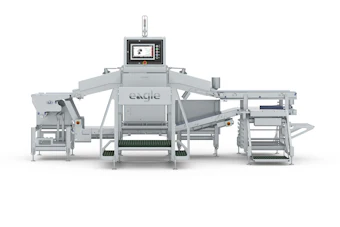
Derrick Teal: Maybe not so much as we would have seen in the past. Again, there was a lot of data, a lot of data companies this time around. But I think I mentioned—I can't remember if it was on End of the Line or another one of our podcasts, maybe it was one at PACK EXPO—Eagle Inspection Systems has introduced a new product. Blanking on the name of it, something 6. Exactly what they were touting it as was using AI as an assistant to help find foreign contaminants in food product, and being able to use that to extrapolate where along the chain something might be problematic. That was unique about it.
There were others that we saw at PACK EXPO that were also at interpack, along the lines of using different frequencies to detect contaminants. It was inspection and detection, but it wasn't necessarily using AI, per se, but different wavelengths to detect different types of contaminants. Matt Reynolds: You said something interesting there that I've been seeing. Derrick Teal: No way. I can't believe I did that.
Matt Reynolds: As long ago as two years ago, three years ago even, Rockwell has been positioning some of the vision and inspection and detection as not only being preventative, like removing something that might have a contaminant in it. Not only being predictive, where it says that this contaminant is happening every hundredth tube of toothpaste or something like that. Not just predictive, not just preventative, but prescriptive, such that it knows that if this happens at this frequency, then that must mean that there's a bearing on machine four in the filler that is near the end of its life, and you'd better go check that bearing because we're seeing a smudge on this side of the tube of toothpaste or something like that. I think that's really interesting, where the AI can recognize a fault or an error or something that's creating scrap, but not only recognizing that the scrap is happening, but where the fault is going to be happening upstream so that you can go fix it. Prescriptive is a pretty interesting use of AI there.
Derrick Teal: It's just so much quicker at detecting patterns than humans are. I think that's where the benefit of AI comes, if it's something that does create a pattern where it can go back and say, A plus B equals C, and go check this out. That's much faster than humans can do it. I think we're seeing a lot more of that.
Sean Riley: It hasn't been a great year for food recalls in the food world. Can that help?
Derrick Teal: No, because that's a product-based thing, potentially. But a lot of it also has to do with cleaning practices, sanitation practices. Yes, it can definitely help with recalls, but a lot of what we've been seeing has been on the bacterial side of things, where that is an indictment on a company's cleaning practices. Again, not saying that it can't help with that, but a lot of this is mostly down to human error.
Liz Cuneo: Interesting. Well, thank you so much, Derrick. Unless you have anything else to add—
Derrick Teal: I did. Talking about human error, we've seen back in August soldiers losing their ice cream because the freezers did not freeze. They were hacked. Then later on, just a few weeks ago, supermarket freezers being hacked and heat being cranked up, fires actually getting started. A lot of people don't realize that freezers in supermarkets can go both ways. They can cool down and they can heat up because it has to be temperature-controlled, and so they have to maintain that temperature no matter what, if it's too cold or it's too warm. Most recently, as you know, Liz, a blood bank system was hacked.
Their freezer system was hacked. Now, it's very early days with any of this. We don't know exactly the motivations, who was behind it, anything like that. But what's interesting is that a lot of blame has been thrown around—I'm not going to name the company—at one company's controllers in particular, that they were left exposed to the internet. Not the intranet, internet, which gave bad actors access to that. Why they were left exposed to the internet, that's a good question, but that is what they think happened. How they got access to that, again, it's all very early days. Don't really know how or why, but we do know that it's down to the fault of the controllers on these systems, and hackers are able to gain access and crank up the heat to these freezers. What can be done about that?
I had a great call with Kristen King today. She's the author of Securing What Feeds Us: Cybersecurity and Food and Agriculture, and I've talked with her before about cybersecurity, of course. But I wanted to talk to her about this specifically just because a lot of this seems on the consumer end of things. I was really curious to know, what can a food and beverage manufacturer take away from this, and are there problems that they need to address? The answer is yes. Number one, and this is one of the things that struck me, when you get a new router as an individual, or any printer, one of the first things you should do is change the password from admin, which can be found usually in the documentation on a company's website or in the instruction manual.
A lot of people don't change those personally, but it's possible—again, don't know, this is speculation—that that was the case with some of these freezers, that maybe somebody didn't change the password. We don't know if any of these are related. Maybe something happened, like somebody hacked the U.S. Army's freezers, maybe I'm going to do that with supermarkets and try this. We don't know whether there's any relationship at all. But did somebody change the password or not? We don't know. How come this wasn't noticed earlier? Well, the bad actors changed the alarms. They turned those off, so the people that these systems were intended to notify if there was a problem, that they went beyond the set point—
Liz Cuneo: Temperature excursion.
Derrick Teal: Exactly. Well, they turned those off. That's how they're able to get away with that. But you've got some freezers that were hitting 122°F, 50°C. Now, you can't tell me that somebody's walking by—and that's hot—somebody's walking by one of these and saying, there's something wrong with this freezer. We're seeing melted product. Again, it was that human element. How did humans miss this? Did they have systems and checks and balances in place to ensure something like this didn't happen?
When I was talking to Kristen, what she wanted to get across to manufacturers is, have a plan in place. Don't just assume because you've got the latest and greatest in technology that everything's hunky-dory. You still have to have a plan in place. You still have to have emergency procedures. More importantly, probably beyond any of it, is have a culture in your plant where people feel empowered, if they notice something, to say something. Who knows, maybe somebody did walk by and notice that this freezer's pretty warm, and it's not my job, and walked past it. Or, not my department. I'm just a stock person in this other aisle. This isn't my department. You don't want that happening in your plant. Not just in a food and beverage plant, in cold storage, any warehousing environment, any of those. You want to make sure, probably in general, not just your freezers, that you've got a plan in place with your cybersecurity systems.
Matt Reynolds: We're going to be seeing more and more of that because I know a lot of the retailers that we talk to, and the brand owners, but the retailers who own those shelves are leaning more and more into smart shelves, connected shelves that know the expiration date of the milk on that shelf, such that they can change the price when the expiration date is getting closer. It's an incentive to move that milk faster. I always like to look for the milk that has the longest runway in front of it, but all of that is possible. There's a lot of advantage to having connected shelves, connected freezers, but now we're looking at what the potential dark side of that could be and exposure to bad actors. Really interesting.
Sean Riley: That access is a two-way street.
Liz Cuneo: That's what I talked about, too, which I'll just give a teaser or two. We can talk about it another episode, but how remote access can be a problem when not secured. But it's really the remote access that actually allowed, in the case of the blood bank, for them to see that things were actually going sideways. It's a two-way street, kind of what you said, Derrick, good and bad. We'll see what happens there.
Derrick Teal: That's how they caught it, with the remote access?
Liz Cuneo: Yeah, noticing that, because it really wasn't in the blood bank. It was an off-site place, and they were like, temperatures are not in the right range, so they could remotely see that. Good and bad there.
Sean Riley: We'll get that message to all the IT people out there that the remote access was the hero in this situation because I was immediately thinking that they were at fault. But that's a great way to say that. They stepped in and saved what could be saved.
Liz Cuneo: Absolutely. Well, very good, gentlemen. Thank you for your time today. I hope everyone enjoyed this episode of End of the Line, and I know we'll talk again next week. Thanks, everybody.