While 59% of packaging and processing OEMs actively use AI internally, only 10% have integrated it into their products or customer-facing services, creating a gap between OEM capabilities and customer demand for autonomous, self-correcting equipment intelligence.
- 59% of surveyed OEMs actively use or test AI, but only 10% have integrated it into products or customer-facing services
- Current AI adoption sits primarily behind the scenes: 37% use it for internal operations only, 22% are testing or piloting, and 22% are still evaluating use cases
- End users rank Autonomous Optimization (Agentic AI)—equipment that self-adjusts in real time—among their top desired features, signaling demand ahead of OEM supply
- Two practical bridges to close the gap: tech scouting through partnerships with startups and universities, and customer-facing advisory layers that position OEMs as strategic advisors
- The competitive advantage will go to suppliers who move AI from the back office onto the production line to directly improve runnability and uptime
Artificial intelligence has clearly arrived at packaging and processing OEMs. Where it hasn't arrived is the equipment itself.
According to PMMI's 2026 Innovation for Packaging and Processing OEMs white paper, 59% of surveyed members are actively using or testing AI in some form, and 73% rank integrating new technologies among their top three innovation drivers. Yet only 10% have integrated AI into their products or customer-facing services.
The remaining adoption sits behind the scenes: 37% use AI for internal operations only, 22% are testing or piloting, and another 22% are still evaluating use cases. In short, members are putting AI to work on their business, not yet in their machines.
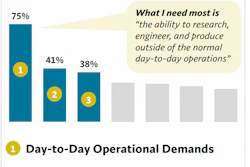
That distinction matters because customers are asking for the opposite. When end users were asked what they most want the machine to do, autonomous, self-correcting intelligence ranked near the top.
The report describes "Autonomous Optimization (Agentic AI),"equipment that self-adjusts in real time when material density fluctuates or a component begins to degrade, maintaining OEE without human intervention. Interviewed customers placed it among their top choices, signaling that the demand for embedded AI is already ahead of OEM supply.
The gap also represents an opening. The research points to two practical bridges. The first is tech scouting: formally partnering with startups or universities to integrate emerging tools like AI and advanced sensors rather than building everything in-house. The second is turning AI into a customer-facing advisory layer, using machine data to show customers where their bottlenecks are, positioning the OEM as a strategic advisor rather than a vendor.
For OEMs, the takeaway is that internal AI fluency is becoming table stakes, but it is not yet a differentiator customers can see. The competitive advantage will go to suppliers who move AI off the back office and onto the production line, where it directly improves runnability and uptime.
SOURCE: 2026 Innovation for Packaging and Processing OEMs
For more insights from PMMI's Business Intelligence team, find reports, including Innovation for Packaging and Processing OEMs, From Complexity to Capability, and Building an AI Advantage in Packaging Equipment at https://www.pmmi.org/business-intelligence.
Download the MEMBERS ONLY report below.