Encore Packaging manufactures most of its strapping equipment and packaging tools domestically in Illinois, making it one of the last American manufacturers in its category. Founded in 2008 by Tim Nelson, the company combines manual innovation with AI-driven operations to serve distributors across 40+ countries.
- Domestic manufacturing focus: Encore produces strapping tools, dispensers, and semi-automatic equipment on-site in Lake Villa, Illinois, differentiating itself in an industry dominated by overseas manufacturers
- Founder's track record: Tim Nelson previously founded Midwest Industrial Packaging, which became the world's largest manual strapping tool company before he sold it to Illinois Tool Works
- Distribution model: The company sells exclusively through a coast-to-coast distributor network and exports to more than 40 countries, deliberately avoiding direct-to-consumer sales
- AI integration: Encore has automated order processing and implemented AI for demand planning and production analysis, improving customer service responsiveness
- Innovation pipeline: The engineering team focuses on sustainability (paper strapping alternatives), battery-powered tools, and solving unmet challenges in manual packaging
There's a short list of people who have done what Tim Nelson has done: sold a packaging equipment company and then built another one from scratch in the same industry, achieving success the second time around.
Nelson founded Encore Packaging in 2008 out of a Lake Villa, Illinois, facility with a single workbench—literally. The photo he keeps of those early days shows a lone bench in the corner of what would become a 58,000-square-foot manufacturing and distribution operation. The timing wasn't ideal. "I convinced my wife at the end of 2007 that it was a good idea for me to go back out on the street on my own, and then we hit the financial crisis," he recalls. "She was very much wondering what I had just done."
 This single workbench was once the entire Encore Packaging operation.Encore Packaging
The business of staying American
What sets Encore Packaging apart in a category long since dominated by overseas manufacturers is straightforward: they make most of what they sell, right in Northern Illinois. Products bearing the American flag logo in Encore's catalog—strapping tools, dispensers, and semi-automatic equipment—are manufactured on-site. "In a lot of cases, we are the last American manufacturer of certain items out there in the marketplace," Nelson says.
The product line spans manual and semi-automatic packaging machines and equipment, alongside a broad consumables portfolio covering strapping, kraft paper, tape, knives, foam, poly tubing, stretch film, pallet bands, pre-cuts, and seals and buckles. Encore does import some products as a channel play to give distributors a fuller line to buy from, but the core of the business is manufactured domestically. "We stayed in more of what someone would consider a Warren Buffett kind of space," Nelson says of his strapping focus. "Everyone else is chasing the big things that make a lot of noise."
The company sells exclusively through distribution, with a coast-to-coast network and exports to more than 40 countries. It's a model Nelson has deliberately maintained. "We have always had an only-selling-through-distribution policy," he says, noting that they also ship direct for many distributor customers with a minimum order threshold.
Engineering depth, innovative instinct
Encore employs just under 50 people, including a team of engineers whom Nelson describes as the company's innovation backbone. While Nelson himself came up through the financial side of the industry—he started his career as a financial analyst before shifting into operations—his son Stephen, a mechanical engineer, now runs the operational side of the business. A second son, Richard, leads digital and AI strategy. Nelson has pivoted his own role increasingly toward sales.
"If I'm out knocking on doors and calling on customers, they're pretty much running two-thirds of the company day in, day out," he says.
New product ideas at Encore come largely from listening to customers, distribution partners, and the market. "Find problems, develop solutions" is how Nelson describes the approach. Sustainability has opened real opportunities. Paper strapping continues to grow as a product category, with brands seeking alternatives to plastic. Encore has also developed dispenser equipment designed to improve consumable performance for end users, creating a pull-through dynamic that supports both tool and consumable sales.
Battery-powered tools are another area of focus. "Pneumatic tools are quickly fading away, and the lithium-ion batteries have definitely ramped everything up for everybody," Nelson says. The engineering team is building toward that shift while continuing to identify what he calls "Holy Grails"—unmet challenges in the manual packaging space, like paper strapping tools that still haven't been fully solved to commercial standards.
AI in a hands-on business
Nelson is candid that he's an unlikely early adopter of artificial intelligence tools, but Encore has leaned into AI more aggressively than you might expect from a 45-person manufacturer. Order processing, once a manual effort that consumed his customer service team's day, is now largely automated. The payoff has been responsiveness: when a customer calls Encore, a person picks up the phone—quickly, Nelson adds—and that person has product knowledge. Weekly training sessions reinforce it.
As the leader of the company's broader AI effort, Richard Nelson has a particular focus on staying relevant as distribution consolidates. Private equity-backed roll-ups are reshaping the distributor landscape, replacing the personal relationships that sustained the business for years with larger, more transactional purchasing structures. Staying visible in that new environment—including to AI-driven procurement agents—is a strategic priority. Stephen Nelson continues to streamline the company to meet the ever-increasing demand. He has been using AI to assist with demand planning and analyzing critical production data.
Building for the next generation
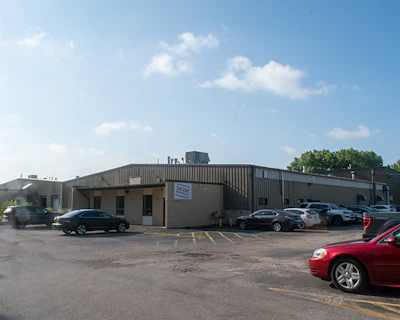
Encore's 58,000-square-foot facility sits on six acres in Lake Villa, with room to expand if needed. Nelson says expansion isn't on the near-term agenda, but the company's trajectory is clearly forward. The succession plan is taking shape around his two sons, and the workforce has stabilized after the volatility of the COVID years and the subsequent supply chain squeeze. The average tenure of Encore's employees has grown, and the company has promoted people from the assembly line into customer service, engineering, and other roles.
"Innovation, growth, and the ability to impact the world just a little bit," is how Nelson describes what employees find at Encore.
As for his own exit horizon, Nelson is deliberately vague. He's been in the packaging industry for more than 40 years. He'd like to leave the business with a sustainable sales team and, ideally, some lasting market contribution. But he's not putting a date on it.
"I've been doing this since 1984, so I'm going on 42 years now," he says. "Packaging has been able to provide for my family and me. I really appreciate that side of it."